Chinese Embassy accuses PCIJ and journalist contributor of propaganda
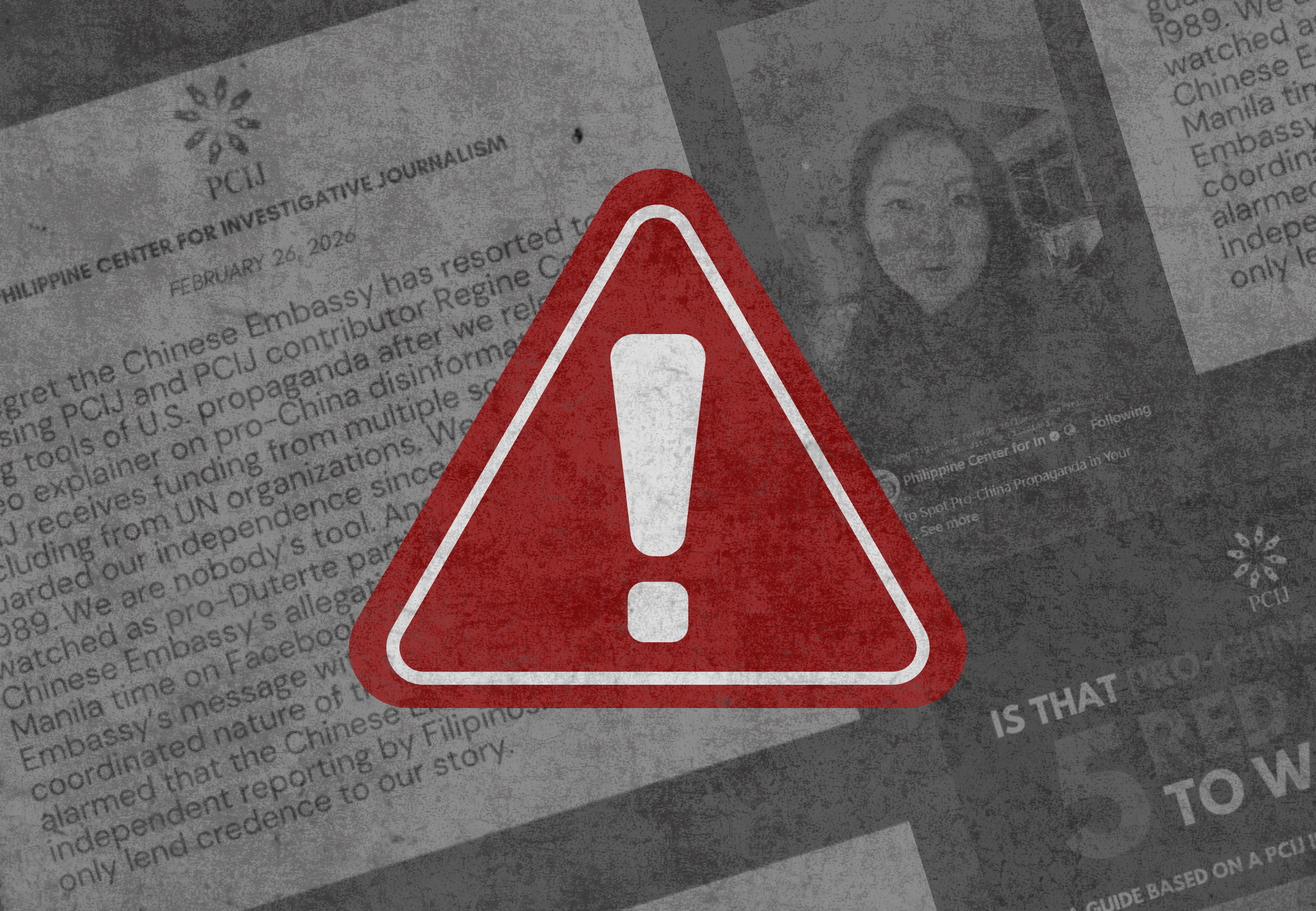
CMFR/PHILIPPINES – On February 25, 2026, Deputy Spokesperson of the Chinese Embassy, Guo Wei, publicly criticized the Philippine Center for Investigative Journalism (PCIJ) and journalist Regine Cabato on social media platform X (formerly Twitter), accusing them of being tools of U.S. propaganda.
The callout was in response to PCIJ’s video report, “How to Spot Pro-China Propaganda on Your Feed,” released on February 21, 2026 in its Facebook page. Cabato’s report cited sources such as a January 2024 study by political economist and sociologist Alvin Camba and a confidential report obtained by former Supreme Court Justice Antonio Carpio, among others. The report highlighted clear “red flags” such as the repeated amplification of Beijing’s claims over the West Philippine Sea despite the 2016 arbitral ruling, as well as the use of sinophobia, exaggerated victimhood narratives, or excessive fearmongering to polarize audiences and deflect scrutiny.
The embassy also claimed that “the PCIJ is funded by the US National Endowment for Democracy (NED)” which they said as “widely seen as a ‘white glove’ of the US government… involved in interfering in other countries’ internal affairs, stoking division and confrontation, and influencing public opinion under the banner of promoting democracy.” It framed PCIJ’s reporting and Cabato’s work as aligned with foreign interests, casting doubt on the credibility of their investigative journalism.
PCIJ responded on a February 26 statement, saying that they “regret the Chinese Embassy has resorted to accusing PCIJ and PCIJ contributor Regine Cabato of being tools of U.S. propaganda.” The organization clarified that its funding comes from multiple sources and reaffirmed its mission to provide context and clarity on matters of public interest, including foreign influence and disinformation. PCIJ added, “We are nobody’s tool… The virality of the Embassy’s message within a few hours attests to the coordinated nature of this online attack. We are alarmed that the Chinese Embassy is attacking independent reporting by Filipinos. Their actions only lend credence to our story.”
On March 1, PCIJ also published an infographic showing how the “Chinese Embassy in Manila and Duterte partisans ganged up” on them, citing data from democracy.net.ph. The graphic visualized spikes in social media posts in a short amount of time linked to coordinated messaging attacking PCIJ and Regine Cabato, illustrating how both the embassy’s statement and allied influencers amplified criticism across platforms.
The incident has highlighted the troubling stance that the Chinese Embassy has taken regarding press coverage of sensitive matters. This underscores a concerning trend related to press freedom.
Public accusations by a foreign diplomatic organization against independent journalists risk chilling investigative reporting on sensitive topics, including foreign influence operations. CMFR stresses that criticism of journalism should be based on evidence, not ad hominem attacks or geopolitical framing. PCIJ’s work, grounded in publicly available sources and verified research, exemplifies the role of investigative journalism in holding public discourse accountable.
CMFR reiterates that journalists and independent media organizations must be able to conduct their work without fear of intimidation, disparagement, or pressure from state or non-state actors.
Leave a Reply