The narrative war and dehumanization of “Toboso 19”
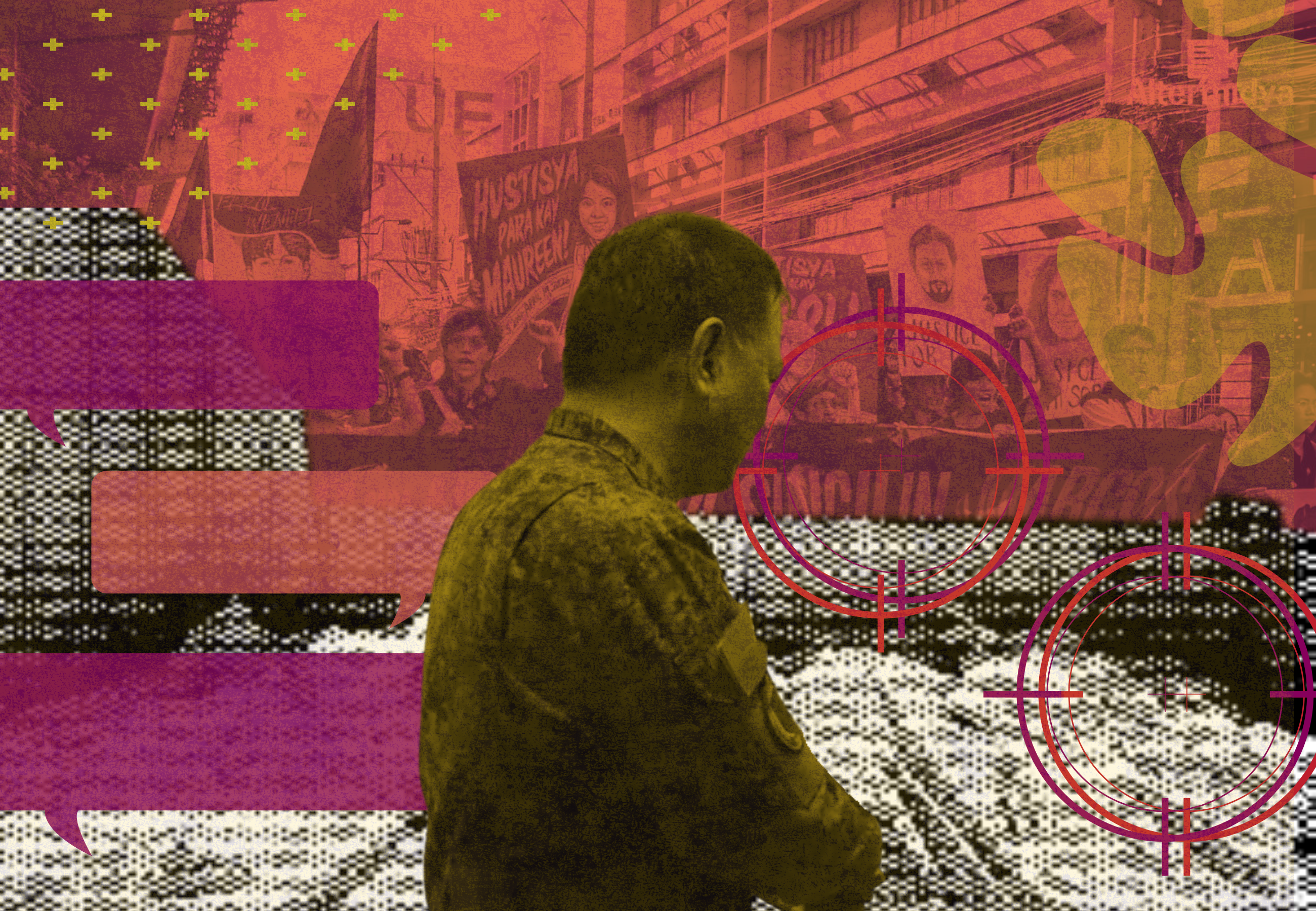
ON APRIL 19, 2026, the 79th Infantry Battalion of the Philippine Army reported a “series of encounters” in Barangay Salamanca, Toboso, Negros Occidental, that ended with a count of 19 fatalities. The state swiftly delivered the narrative of a 12-hour gunfight with the New People’s Army (NPA).
When the smoke of battle cleared, the “Toboso 19” emerged not just as a military victory, but as a battle for the press too. This review monitors the media’s shift from passive stenography to active interrogation. In conflicts where the line between combatant and civilian is often blurred, the media’s duty is to scrutinize official body counts and investigate the identities behind the “nameless” dead.
The conflicting story
Reports included civilian victims in Toboso, namely, RJ Nichole Ledesma, a community journalist; Alyssa Alano, a student leader at UP Diliman; Maureen Keil Santuyo and Errol Wendel, peasant organizers, and Lyle Prijoles and Kai Sorem, two American solidarity workers; and two minors, aged 15 and 17.
Military press releases dominated the initial wave of reports. However, media coverage evolved as news outlets and some veteran broadcasters began to pull at the threads of the official story. The coverage moved away from the supposedly neutral recording of a clash between the AFP and the NPA. Journalists reviewed reports carried in the mainstream and on social media, checking possible violations and the different narratives.
Scrutinizing the “Facts”
Veteran broadcaster Ted Failon, in his interview with the AFP spokesperson, pressed for information and pointedly asked AFP spokesperson Col. Francel Margaaret Padilla how well the AFP preserved the crime scene in Toboso. He also noted the absence of body cameras on the operating troops and scrutinized the military’s claim that all 19 victims were armed, asking, “Bakit parang nakasalansa na ‘yung mga katawan? Bakit… parang curated?”.
As the AFP reported the recovery of 24 firearms, Failon pressed Padilla to confirm if the journalist and students were found to be individually holding weapons. Padilla could only reply that the military wanted to observe caution, and asked to wait for “fully validated” findings from the SOCO.
Countering the propaganda
Christian Esguerra and Jessica Soho on Kapuso mo Jessica Soho (KMJS) looked not only into the event but also the online feed that followed, providing a critical analysis of the event, including interviews with Carlos Conde of Rights Report Philippines and Julianne Agpalo, a lawyer.
Christian Esguerra, on a Facts First episode, interviewed Conde, who highlighted the use of AI-generated images and “corned beef” memes—a reference to the mangled remains of the victims—spread by disinformation peddlers. Conde criticized the military’s victory claims, pointing out the contrast between their portrayal of a disciplined operation and the offensive memes mocking victims shared online.
He argued that the military’s legitimacy is questioned if they ignore supporters who celebrate violence. To be seen as a professional force, they must denounce these “revolting” attacks.
Esguerra emphasized the need to respect the humanity of the victims, whatever their politics. He was highly critical of the reactions on social media, stating, “People say ‘Serves you right, you’re corned beef.’ The lack of humanity is truly appalling; their comments are revolting.” He went on to ask, “How did we reach such a low point in our discussion?”
In KMJS, lawyer Julianne Agpalo of the National Union of People’s Lawyers issued a pointed reminder: “There are grieving families, and this represents a systematic tactic of dehumanization.”
The humanity of victims
The alternative outlet Bulatlat and KMJS provided stories to give the numbers a human face: profiling the victims as dedicated rights defenders, students, and farmers rather than “terrorists.” Both news outlets reached out to the families of the victims to reveal their stories and who they are.
Bulatlat also reviewed the important principles in International Humanitarian Law. Under IHL, civilians remain protected persons even if found at an encounter site and must be treated humanely.
Bulatlat provided critical historical context by recalling a similar pattern of violence in Negros, specifically the June 14, 2023, massacre of the Fausto family in Himamaylan City. In that incident, spouses Roly and Emelda Fausto, along with their two young sons aged 15 and 12, were killed in their home—a tragedy that human rights groups linked to the “normalization” of military harassment against peasant families.
KMJS provided a sharp analysis and conclusion: “Yun po ang kalaban: kahirapan.” This means that poverty is the real enemy, as it drives people to revolt and fuels rebellion, explaining why individuals join such causes.
The Battle for the Narrative
The Toboso massacre illustrates that the war has been prolonged and continues to spread into other areas, such as social media. Consequently, this conflict will also be fought in the headlines. If the media does not quickly investigate claims, the state is effectively granted a “license to kill” under the guise of counter-insurgency. Another issue has arisen: Is this celebrated online?
Leave a Reply