Pride stories revisit history, progress, and policy-making
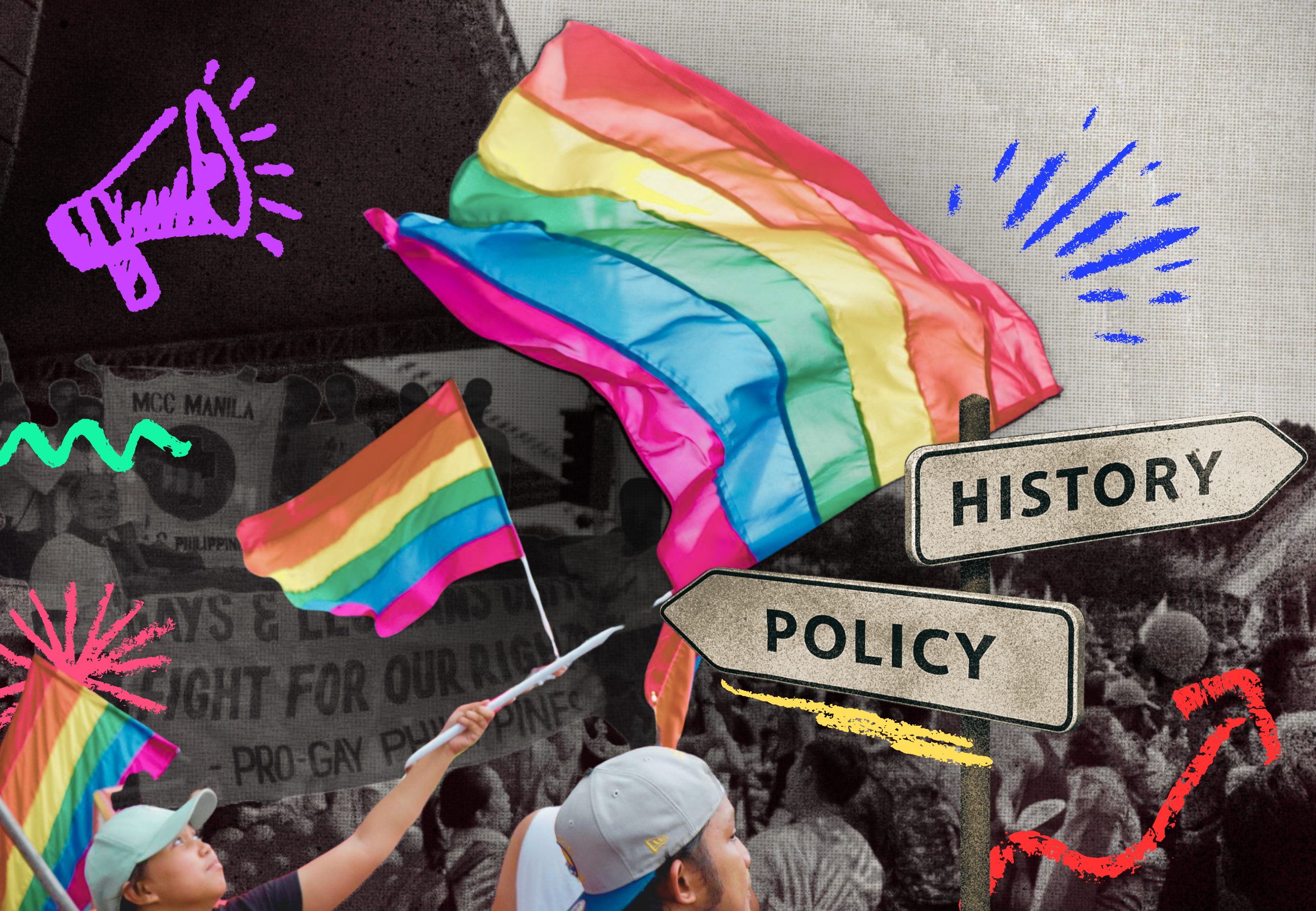
CHEERS TO media organizations that marked the month to celebrate the LGBTQIA+ community in the country, highlighting their shared lives and individual experiences.
Revisiting history
GMA News Online on June 16 and Inquirer.net on June 27 revisited the significance of June for the LGBTQIA+ community, recalling the June 1969 Stonewall Riots in New York City as a defining moment in the struggle for equal rights globally.
The reports traced the history of their campaign for recognition and respect, recalling the first Pride March in the Philippines and Asia on June 26, 1994, when members of the community and advocates gathered in Quezon City calling for equality. Both articles emphasized the collective character of their campaign, noting that queer communities and their allies mobilized not only for LGBTQIA+ rights but also for broader economic and social issues that affect everyone at the time — including rising oil prices, the implementation of the Value Added Tax (VAT), stronger government action on AIDS and HIV, and social inequality.
The articles noted that these intersecting issues persist presently, with more recent calls for the urgent passage of the Sexual Orientation, Gender Identity and Expression, and Sex Characteristics (SOGIESC) Bill — a measure that strengthens protections against gender-based discrimination. The bill was first introduced two decades ago and has remained pending for 25 years.
Legal measures
Aside from the SOGIESC Bill, media also focused on several legislative measures that would provide for greater gender-based protection. Coverage included discussion of policy-making and local government mandates designed to improve the inclusion of LGBTQIA+ community and the observance of their rights in Philippine society.
Legal gender recognition
Coverage gave prominence to stories that showed actual experience caused by the lack of laws to ensure gender recognition and affirmation.
Bulatlat’s piece pointed to the absence of a legal gender recognition (LGR) law in the Philippines, which prevents transgender and non-binary individuals from amending the sex or gender markers on their birth certificates and other legal documents, limiting their access to legal protection, privacy, and self-determination.
With emphasis on the lack of legislation, Bulatlat’s report explained that transgender and non-binary individuals who are not legally recognized by their preferred identity are more vulnerable to gender-based marginalization and violence.
Citing records from the Commission on Human Rights (CHR) and data from the United Nations Development Programme (UNDP), the report detailed the persistence of gender discrimination across employment, education, public spaces, social security services, and official records.
Sharmaine Bill
Akbayan Party-list filed in the House of Representatives House Bill No. 9929, or the Lived Identities Recognition Bill, dubbed the “Sharmaine Bill.” The nickname was derived from a viral meme featuring a talking orange fruit wanting to change its name to “Sharmaine,” saying that being named “orange” — similar to its own color — was too boring.
The Sharmaine Bill seeks to establish a simple administrative process for transgender and non-binary Filipinos to change their names in official documents, allowing them to fulfill their true identities. The current legal process for name changes is lengthy and costly.
Media, across online platforms, picked up the proposal. Inquirer.net, The Manila Times, Philstar.com, presented the policy in short news, focusing on quotations from its proponents, including lawmakers Perci Cendaña and Chel Diokno.
GMA News Feed’s Explainer stands out for its detailed explanation of the proposed bill. Aside from transgender and non-binary individuals who wish to align their names with their gender identity, the bill also provides relief for intersex individuals who experience initial sex misclassification and victim-survivors of gender-based violence seeking to change their names for safety and mental health reasons. The explainer discussed the discrimination against these individuals, highlighting the need for greater public awareness of and the required sensitivity in presenting their issues in the news.
Healthcare
Separate media reports also presented proposed legislation to promote queer healthcare rights, particularly through local government initiatives such as the Right to Care Card. In medical emergencies, queer partners living together often have no automatic legal authority to make decisions for one another. The Right to Care Card addresses this problem by allowing partners to make health-related decisions on each other’s behalf through a special power of attorney.
Reports from Philstar.com on June 22 and News5’s Frontline on June 29 discussed the importance of the program, highlighting the long-standing barriers faced by queer couples when it comes to medical decisions concerning their partners.
Philstar.com’s article focused on the effects of the ordinance, which was initiated by the Quezon City Local Government Unit in 2023. The article reported that in a period of three years, local government units such as San Juan City, Iloilo City, Parañaque, Dasmariñas, and Mandaluyong adopted similar measures. Such reporting shows the effects of media’s coverage of policies and practices, which can enable more local governments to adopt similar policies that extend these long-denied rights to their constituents.
News5’s Frontline conducted an interview with a queer couple who have personally experienced similar legal limitations in a medical situation, demonstrating more understanding of their perspectives in reporting the issue. This framing of news presents the experience of queer couples as part of the human experience. The report was a sharp reminder that queer couples who have lived together for years deserve the same treatment as any other couple, having the same rights as provided in the law to make decisions for one another in case of emergencies.
A more inclusive society calls for better protection for all its members, regardless of an individual’s identity and lived reality. While there has been some progress, more needs to be done. Media can help, as its attention to queer stories throughout the years has contributed in shaping a more open and progressive outlook in Philippine society. Legislative measures would ensure this as a permanent position, represented by expressed public policy.
Media advocacy could push LGBTQIA+ narratives, highlighting the marginalization that they continue to face. Reports on these themes should be published throughout the year, not just during Pride month. Presenting their stories as part of the human experience would help to form new mindsets, new attitudes.
Like all human rights, LGBTQIA+ issues should be mainstreamed, reflected in the coverage of community events, local ordinances, and human interest stories, and included as normal aspects of shared public life in the country.
The media, including entertainment media, should be involved. These ease the perpetuation of values that promote acceptance of the differences that set us apart from one another, helping everyone to see these differences as part of our shared humanity.
News media should not delay its own participation in the creation of a society where everyone enjoys deserved attention and respect. In fact, journalists may need to make some effort to tell more stories to promote the fullness of society and the equality of respect for everyone.
Leave a Reply