No rest for the faithful: News disrupts Holy Week lull
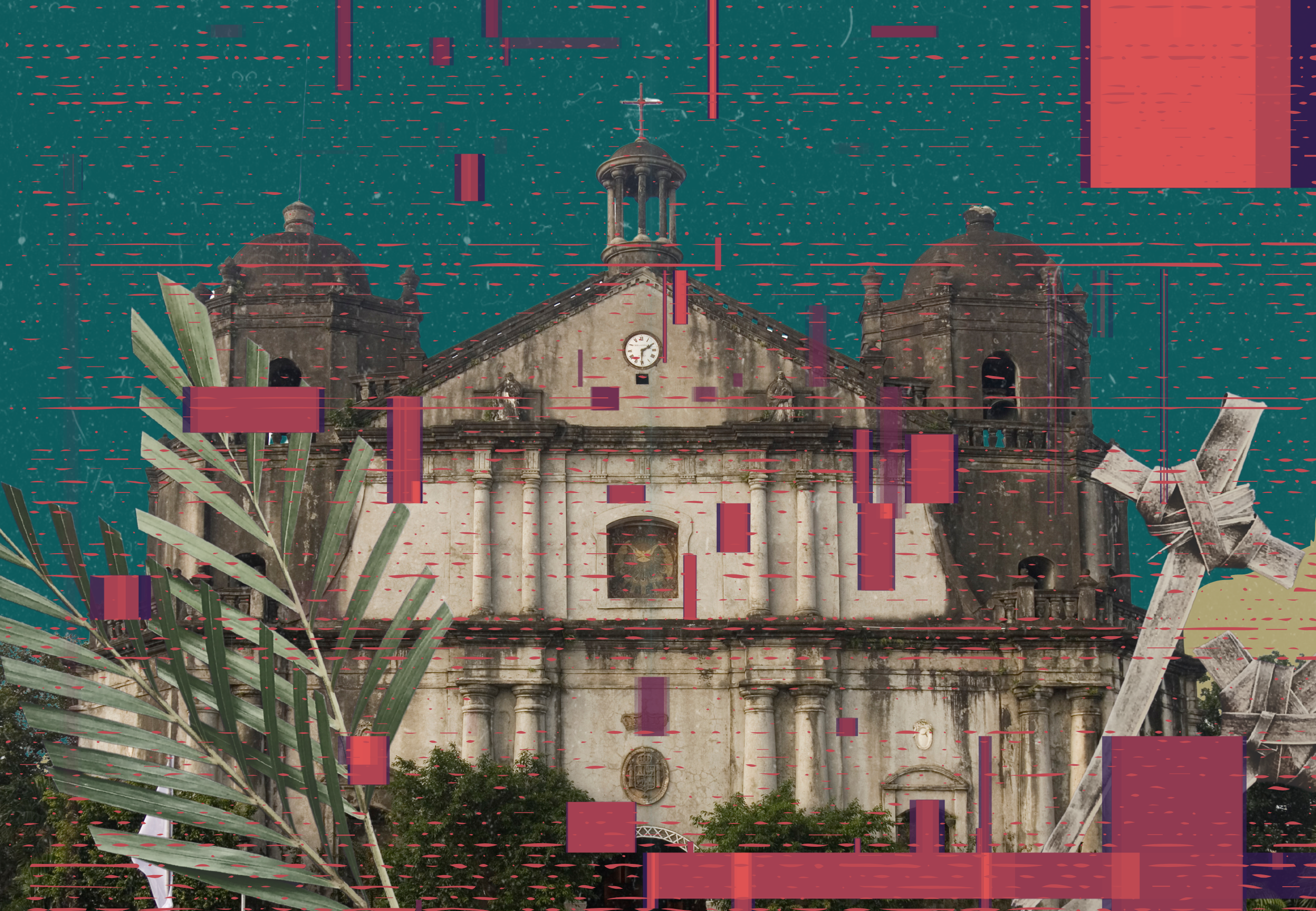
HOLY WEEK in April imposed the traditional respite from news as media companies joined the country’s observance of religious as well as secular activities nationwide. As usual, media reports filled the airtime with news of the mass exodus of Filipinos to their provinces and other holiday destinations. Coverage captured the landscape of faith in church and on the streets, barefoot flagellants in the heat of the sun, scenes of the Pasyón staged in the open air, and group visits to different places of worship.
Meanwhile, news during the holy days were far from quiet.
From Maundy Thursday to Easter Sunday, reports disrupted the quiet mood that usually descends on Filipino communities. News shared the violence of a police shoot-out in Palawan, the arrest of two women activists in Iloilo, and on Easter Sunday, an act of animal cruelty marred jubilant church rites in Malabon.
Beyond the usual
A few news organizations offered fresh perspectives on the season, adding context and depth to the usual treatment of religious traditions and social customs, with scholarly and spiritual input into the national exercise of faith, religion, and other matters of mind and spirit.
Cabby Rose Basina of GMA News enriched the seasonal coverage by publishing an explainer of traditional practices that have engaged Filipinos in different parts of the country.
It explained the Pabasa (chanting of the passion in Pilipino), the dramatic storytelling of the Senakulo, and the symbolism of the Salubong. With insights shared by priests and historians, GMA presented information with a dual framework, presenting the rites and rituals not just as customs but as actual engagement in the faith and history of Filipinos.
Kurt Dela Peña of Inquirer.net posted a series of reports on folk devotions in various provinces around the country, presenting more than the experience of visual spectacle to explain the cultural signals and meanings indicated in religious observances of Holy Week in different provinces.
He documented the unique transition of the season through the “wooden clatter” of the matraca — traditional noisemakers — as the bells go silent during the holy days. In another report, he called attention to the devotion of women who walk barefoot in Pampanga and Camarines Sur. Showing the devotees veiled in black, Dela Peñaintroduced the public to yet another glimpse of the deeply ingrained religiosity of Filipinos who link their personal experience of grief to the need for penance and reparation for sins.
No holiday for injustice
Cruelty in the cathedral
The suffering pigeon in the church ritual in Malabon dominated the news on Easter Sunday. The dramatization of the Holy Spirit involved an act of animal cruelty. Restrained with its wings forcibly spread and cable-tied to a rod, the bird was used as a mechanical prop before being hoisted by balloons; it reportedly expired shortly after from the extreme physical distress of the ordeal.
Philstar.com broke the story, which went viral on social media, a scandal that so outraged netizens, some of whom threatened to take legal action.
Media reports later said that both the Diocese of Kalookan and the San Bartolome Parish in Malabon issued formal apologies, describing the incident as a “lack of foresight.” Media followed up with reports, shifting away from the initial news narrative of “tradition gone wrong” to potential criminality, showing more photos of the tormented creature.
Reports cited the Philippine Animal Welfare Society (PAWS), which explicitly warned of legal action under the Animal Welfare Act (RA 8485). PAWS emphasized that “tradition is never an excuse for animal cruelty,” a sentiment echoed by environmental advocates who criticized the media for ending coverage with the apology issued by the parish. Rappler published a simple but powerful comic strip about the suffering pigeon with Proverbs 12:10, a bible verse that emphasizes that true righteousness shows compassion for the animals, written across the artwork.
Maundy Thursday arrests
Only Bulatlat and Inquirer.net called attention to the grave violation of due process and human dignity that occurred during Holy Week.
On April 2 (Maundy Thursday), veteran women development workers Josephine Parra Porquia and Ma. Luisa Tagamolila Guillen were arrested in Iloilo during a joint police-military operation.
Both reports were posted the next day, April 3, pointing out the “calculated” timing of the arrests. The reports quoted Bayan Muna Representative Neri Colmenares, who said that arresting elderly women on a holiday when courts are closed ensures “a kind of timing being done deliberately to delay the process and keep the victims imprisoned without a basis.”
Good Friday shooting
Initial reports from Inquirer.net and ABS-CBN News described the observance of Holy Week as “generally peaceful,” following the standard report from the Philippine National Police (PNP). However, they also highlighted the violent incidents in Palawan, referring to the “grizzly details” as a violation of the spirit of the season.
On April 3 (Good Friday), a lethal gunfight erupted at a wake in Barangay Irawan, Puerto Princesa where men were drinking and broke into a fight. The call to the police brought to the scene off-duty police officers and a Bureau of Corrections (BuCor) personnel, who were all under the influence of alcohol too and were not in uniform. The confrontation resulted in the deaths of two police officers and one BuCor employee. News reports followed up on the story after Holy Week.
The press on vigil
The news during Holy Week this year reflected the duality of human experience as a time of profound reflection amid the harsh realities of life. It has been established as a custom in this predominantly Catholic country for news organizations to attempt to honor the season set aside for religious faith and practice, with some news outlets even suspending their service for two days, from Good Friday to Black Saturday.
As the events aforementioned show, not to mention the ongoing conflict in the Middle East, there is no rest for those in the business of news, and its pursuit should never go on holiday. Journalists may discover that in these special periods of faith and prayer, the mind and heart grow in their capacity to define the news that really matters.
Leave a Reply