Data over drama: PCIJ exposes cases against Senators behind theatrics
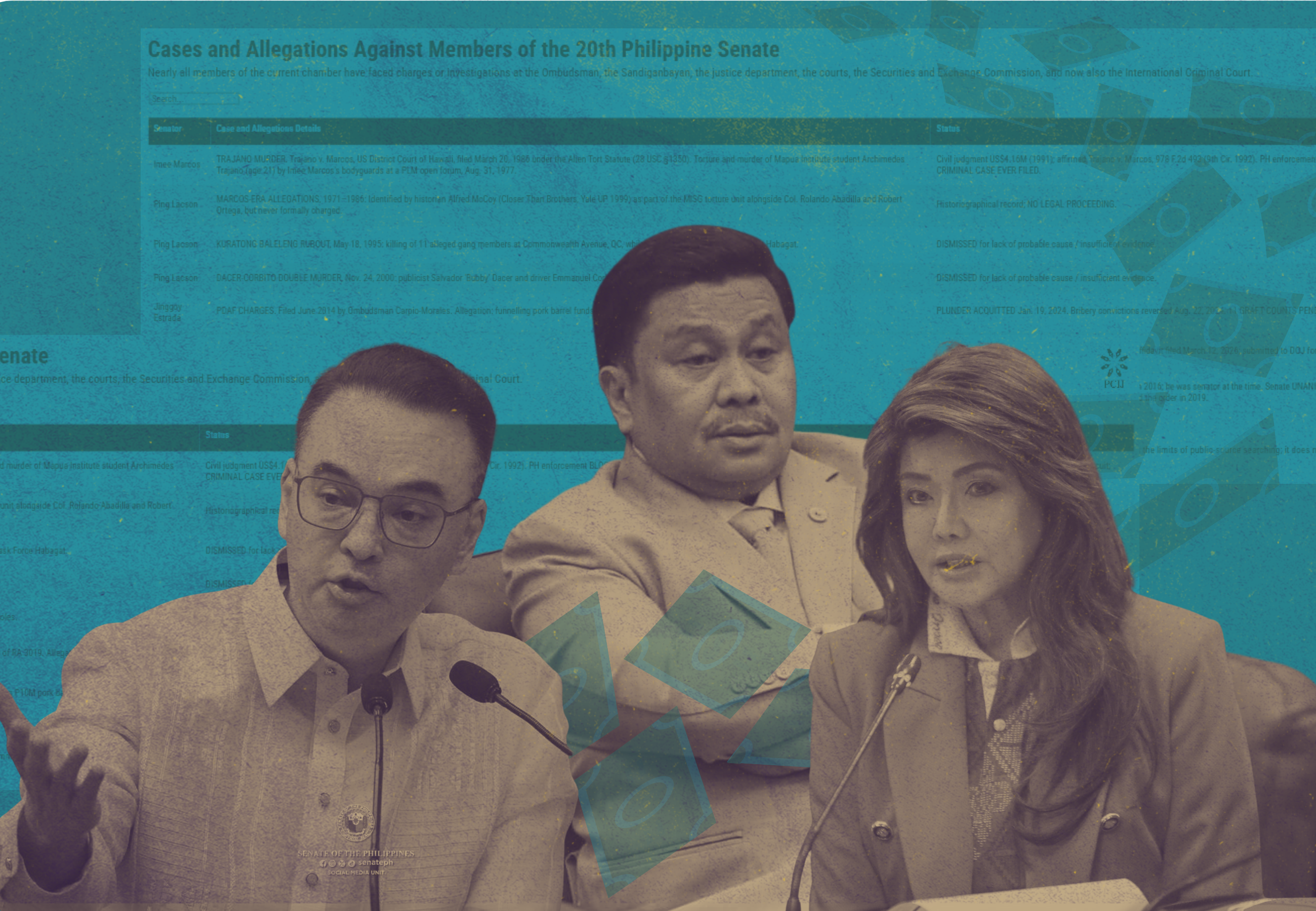
CHEERS TO the Philippine Center for Investigative Journalism (PCIJ) for its data-driven report, focusing media attention on accountability, moving away from partisan and political theatrics that were on display in the upper chamber of Congress this past week.
The political turmoil that engulfed the Philippine Senate had followed a sudden change of leadership, installing Alan Peter Cayetano as Senate President at the start of impeachment proceedings to remove Sara Duterte from the vice presidency, the ICC’s issuance of a warrant of arrest for Senator Ronald “Bato” dela Rosa; and the implementation of plunder charges against Senator Jinggoy Estrada.
A Political Circus
Mainstream media outfits gave the high-stakes crisis in the Senate overwhelming prominence, with banner headlines and minute-by-minute accounts that began on May 11, 2026.
While the media did well in providing context for the May 13 Senate fiasco, the mainstream press soon enough focused heavily on the daily “brouhaha” and personal friction among shifting political factions.
From the onset of the leadership shift through late May 2026, general reporting increasingly echoed the defensive narratives of the newly formed 13-member majority bloc. Mainstream reports routinely adopted and amplified claims that the legal developments—specifically the unsealed ICC arrest warrant against Senator Ronald “Bato” dela Rosa and the Office of the Ombudsman’s plunder charges against Senator Jinggoy Estrada—amounted to an aggressive “political persecution” orchestrated by the Marcos Jr. administration against its political opponents.
Reports frequently cited Senator Imee Marcos, who explicitly slammed the multi-billion-peso plunder charges against Estrada as a “plot to diminish the power of the majority by the administration.” Senate President Alan Peter Cayetano also claimed that state investigations were being weaponized to “threaten and intimidate” his allies into jumping ship or facing arrest.
PCIJ Report exposed charges against senators
PCIJ turned away from this echo chamber to provide a short but concise article that mapped out an exhaustive data table detailing the pending, active, and historical cases faced by all members of the 20th Philippine Senate, including Marcos and Cayetano.
PCIJ explicitly pointed out that 11 of the 13 senators behind the leadership coup face active or unresolved investigations. Six of them—including Estrada, Cayetano, Escudero, and Joel Villanueva—are directly tied to the multi-billion-peso flood-control corruption probes.
The report proved that legal issues have hounded the Senate under every administration since Martial Law. By documenting cases ranging from Imee Marcos’s civil judgment in the 1977 Archimedes Trajano case to recent graft cases, PCIJ showed the systemic impunity that has been alive and well, alas, thriving, within Senate walls.
PCIJ’s presented the public with a clear table of charges and investigations of wrongdoing by members of the Senate, in effect, presenting evidence of the Senate’s consistent failure to investigate the conduct of its members.
Unfortunately, for Filipinos, senatorial indignation notwithstanding, the Upper House seems to have lost the credibility to do the job of going after their erring members. Are there enough clean hands to scrub away the accumulated individual and institutional dirt?
Why is this important
Media reports may quickly become so routine in the manner of reporting official statements and misconduct. The constant coverage of political failures and flaws may make these so ordinary as to be tolerated, even accepted.
Journalists must work to counter this effect. Media reports must probe quickly to capture the difference in the case, the greater magnitude of offenses, the new areas in which corruption rears its ugly head, or call attention to the dynastic record of corruption, recounting offenses in the past.
Reports should make the necessary connections. PCIJ’s report reminds the public of the irony of an approaching event: the very institution designed to judge Vice President Sara Duterte’s alleged misuse of public funds involves as judges senators who are facing identical accusations.
Leave a Reply