EDSA at 40: Between commemoration and counter-narrative
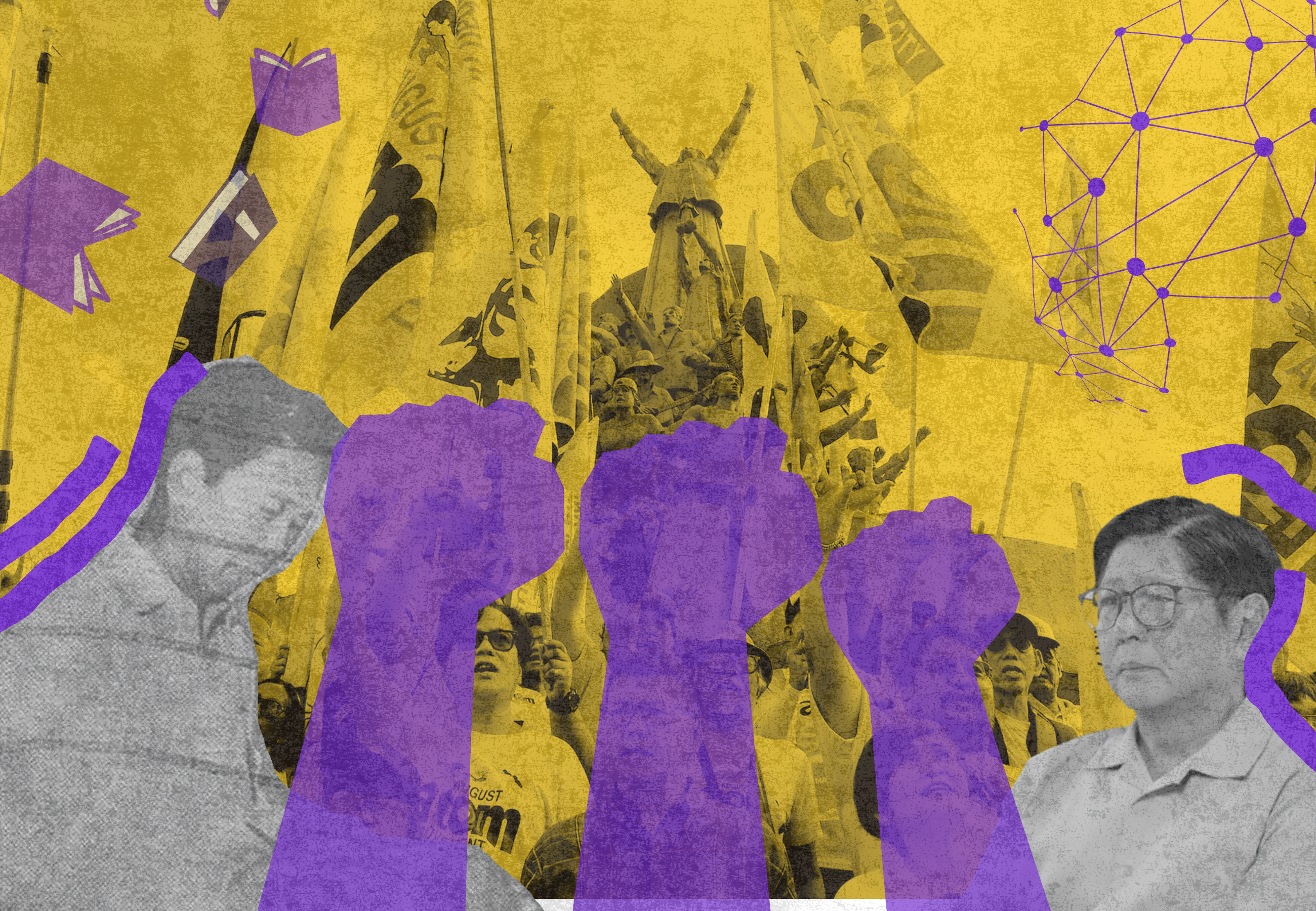
FORTY YEARS after the fall of Ferdinand Marcos Sr., the commemoration of the 1986 People Power Revolution unfolded as an annual ceremonial rite of remembrance, showcasing its enduring significance.
With February 25 declared a special working day instead of a public holiday, the media played an essential role in recalling the memory of democracy’s restoration and its rebirth in 1986.
In February 2026, press coverage focused on the key institutions that gave new meaning to EDSA as a historic site, emphasizing the roles of civil society and the media — two critical elements that made those four days in history possible.
The 40th anniversary of the uprising on February 25, 2026, highlighted the diverse ways the media sought to transcend mere nostalgia, working to deepen the significance of this milestone.
A Working Day as State Narrative
Coverage consistently highlighted Malacañang’s decision to keep February 25 a working day. Reports by ABS-CBN News, GMA Integrated News, andthe Philippine Daily Inquirer grounded the implications of the declaration, with the frequent mention of earlier milestones celebrated as non-working holidays. The Inquirer editorial even argued that the downgrade of the date to a just a “special working day” was part of a broader campaign to “erase EDSA” and encourage “official amnesia.”
Events on the Ground: Modest Crowds, Persistent Message
Against this background, reports converged on activities at the EDSA Shrine and the People Power Monument, the site of prayer rallies, interfaith services, youth-led gatherings, and protest actions during the day.
Coverage showed security forces fielded in significant numbers, with roughly 14,000 personnel deployed to manage thousands of Filipinos who were out on the streets that day. The day’s activities were mobilized by a coalition of religious groups, political leaders, and student activists who presented the EDSA revolution’s legacy in current terms, the call against political dynasties and the corruption that continues to plague government, including the misuse of funds allocated for flood control.
Television segments and digital live feeds showcased the participation of students, church groups, activists, and martial law survivors. Rappler assigned its reporters to various posts for on-the-ground coverage of the people’s turnout for the event. Reports included clips of speeches of speakers onstage who used the opportunity to highlight public concern about corruption, disinformation, and the need for institutional reform.
Major outlets like ABS-CBN News, Rappler, and NewsWatch Plus highlighted the recurring call for “accountability,” framing the 40th anniversary as a launching pad for political reform, turning away from the nostalgia for the event and its past history, and emphasizing the current call for much-needed change.
Media also picked up the “Trillion Peso March” and the citizen-led “Bisto Proyekto: Ang Bagong People Power” which involves public participation in the monitoring of infrastructure projects and the disbursement of funds. The shift dramatizes the channeling of the 1986 “people power” to address current problems, such as the flood control scandal and the persistence of political dynasties.
Amid the historical background of 1986 and its drama, the anniversary occasioned the search for technical tools that would enhance the public campaign for reform.
This coverage emphasized that the theme, presenting the EDSA events as a historic turning point that could inspire the popular will to mobilize people to attend to “unfinished business” – the need to move from street marches and public rallies to more concrete tasks of networking, monitoring projects, exercising vigilant public watch over the exercise of official power.
Field reporters noted the smaller crowds, but also described the participants’ call for resilience and continuity. After forty years, there is still so much work to be done. Thus, the relevance of people power as a mobilizing idea for organizations and individuals to join hands and to work together.
EDSA 1986 happened in an entirely different context. But the idea itself remains as an inspiration, one that can enliven the efforts of nation-building as these evolve in time.
In this new age of digital tools, people power can rise again, armed with data, information, and knowledge to check and to hold accountable those who abuse the power and privilege of public office,
Youth and the Struggle Over Historical Memory
A distinct focus across platforms was the need to preserve the legacy of EDSA for succeeding generations. Many reports featured university students who said they learned about EDSA through textbooks, documentaries, family stories, and increasingly through social media.
VERA Files emphasized how the presence of the youth at commemorative monuments served as a “living lesson” intended to honor the journey of their elders who resisted and survived the dark years of the dictatorship. This theme of bridging the generational gap was also central to Rappler’s coverage, which featured a Gen Z participant reflecting on how People Power is understood by those who did not live through it. In particular, they noted the difficulty of sorting out the “endless swarm of content” and Big Tech algorithms to find historical truth.
Notable Coverage: Retrospectives and New Frameworks
Several news organizations distinguished themselves through in-depth reporting that linked historical lessons to current political realities:
- ABS-CBN News provided a comprehensive look at the “airwave revolution,” specifically focusing on the 1986 “liberation” of the Broadcast Center. Their special features interviewed veterans like filmmaker Jose Javier Reyes and former archives head Leo Katigbak, who recalled how seizing the state-run station turned the tide of the revolt.
- Rappler adopted a multimedia and interactive approach, producing a “playlist” of historic landmarks such as the Carmelite Monastery and Club Filipino to offer important lessons on the uprising.
- News5 History with Lourd utilized a “special podcast” format featuring Professor Xiao Chua. This coverage was notable for its analytical depth, discussing the constitutional safety nets established as a reaction to the Marcos dictatorship and drawing bold parallels between the health secrets of the elder Marcos in 1983 and recent rumors surrounding the current administration.
- GMA Integrated News 24 Oras aired a special report by Ian Cruz that humanized the anniversary through the eyes of survivors — from a 75-year-old nun who faced tanks to a former student activist — while explicitly asking if the “spirit of EDSA” is being erased by history’s apparent reversal.
- Inquirer described the former Radio Veritas transmitter site in Barangay Dakila, Malolos, noting that while it is now used as a bus terminal, it still features “bullet marks still etched on its walls” from the February 1986 attacks by government troops.
Journalism as Democratic Memory
EDSA at 40 employed a more “quiet,” perhaps, more subtle approach than it had done in the past. It started and ended as a working day. But the date was not lost to Filipinos.
For its part, Philippine media rose to the challenge of covering the people’s participation in 2026, ensuring that the anniversary did not pass as a mere footnote. The press did not simply remember 1986. It assessed its legacy, documented its meaning, and placed it in a living and continuing dialogue with the present.
Leave a Reply