Bulatlat marks 25 years of human rights journalism and resistance to censorship
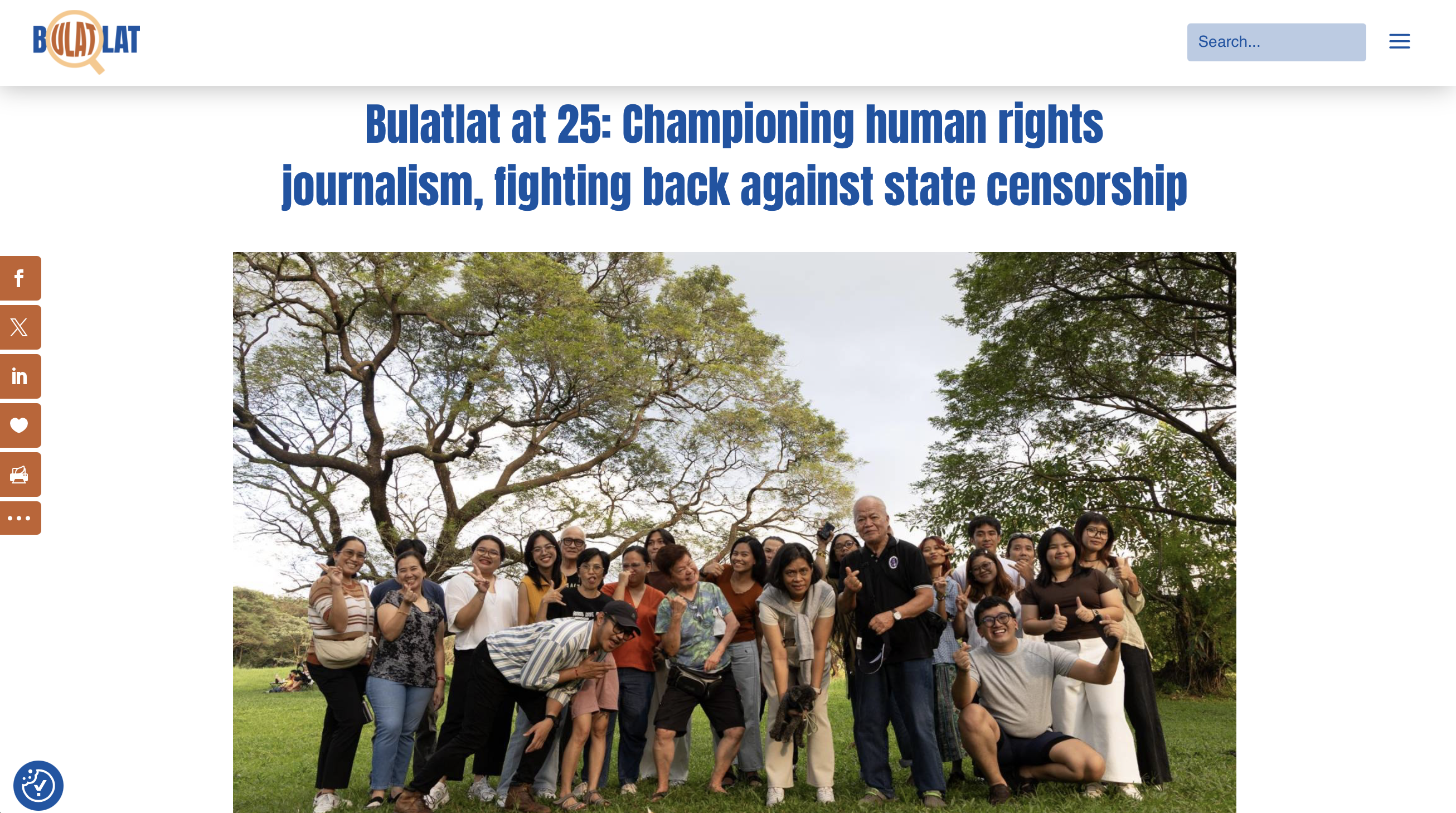
TWENTY-FIVE years is a significant age for many endeavors. For Bulatlat, it cannot help but mark a milestone of triumph. A quarter-century of coverage for any media organization is reason to celebrate, but the sustained coverage of a difficult but most deserving subject should call for celebration. Bulatlat’s focus on the state of human rights and the value of social justice in Philippine society has called attention to the lack of protection of the poor. The news organization has given these difficult themes the focus it deserves.
Coverage has had to scrutinize the conduct of powerful agencies charged with law enforcement, tracking the struggle of grassroots organizations to help vulnerable communities to protect themselves, learning about their rights and the ways to protect themselves against political pressures, including the use of state power against citizens.
Founded in 2001, Bulatlat emerged as an online platform committed to what it calls “journalism for the people,” focusing on communities and issues often sidelined by mainstream media. Over the years, it has built a reputation for in-depth reporting on labor, agrarian reform, indigenous peoples’ rights, environmental conflicts, and state accountability.
In a statement marking the milestone, Bulatlat said the anniversary was not only a celebration but also “proof that journalism rooted in people’s struggles can outlast administrations, overcome censorship, and keep telling the truth.” The newsroom noted that its work has continued despite red-tagging, cyberattacks, and attempts to silence its reporting.
In its anniversary statement, the publication recalled that it had been red-tagged, labeled as enemies of the state, subjected to cyberattacks, and censored through website blocking, which have been noted as moves to silence its coverage of human rights and other social issues. Bulatlat said it responded by challenging these actions through legal and collective efforts, stressing that “journalism rooted in the people’s struggle must continue despite repression.”
Human rights organizations and press-freedom advocates, including regional groups such as FORUM-ASIA, issued statements supporting Bulatlat and urging the Philippine government to respect freedom of expression and access to information. Many of these messages, shared under the hashtag #BulatlatAt25, also highlighted the work of its writers and editors in sustaining people-centered journalism.
Amid these challenges, Bulatlat’s journalism has gained professional recognition. With the reports that have been cheered by CMFR, it received the CMFR Award of Distinction in 2022.
Bulatlat’s 25-year record has done well to demonstrate the role that journalism plays in broadening the public discussion, including in the public forum, the individuals and communities whose endeavors and experiences may fall out of the usual scope of established news conventions.
Leave a Reply