First week of trial: Coverage of VP Sara Duterte’s impeachment
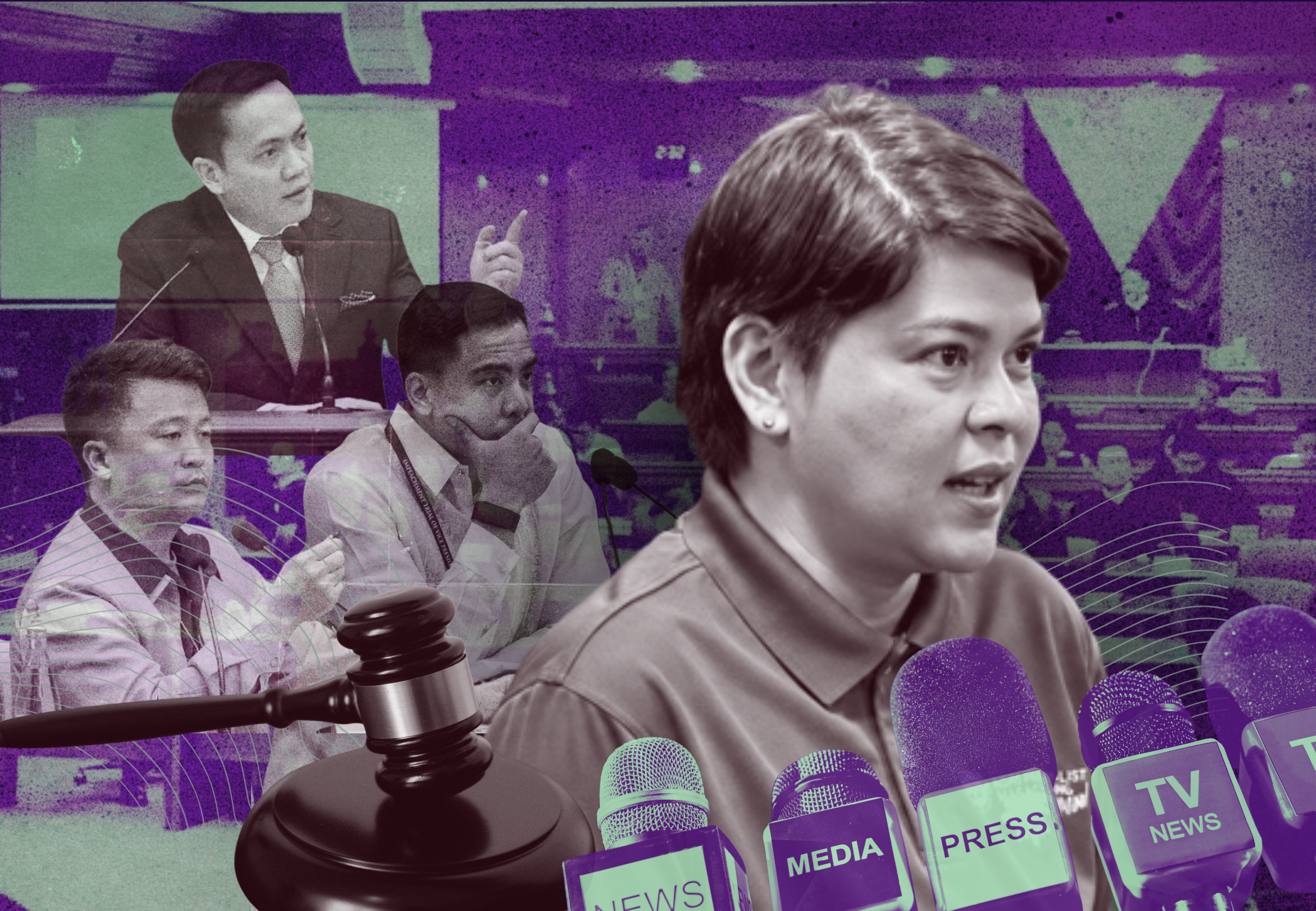
THE FIRST week of the impeachment trial against Vice President Sara Duterte began officially when the Senate met from July 6 until July 8 to, address Article IV of the Articles of Impeachment, to examine the allegations of grave threats, incitement to sedition, and an alleged assassination plot against President Ferdinand Marcos Jr.
The prosecution team, made up of 11 House of Representatives (HOR)’s prosecutors and 15 private lawyers, presented a video recording of Duterte’s November 23, 2024 online press briefing as its first evidence; and called National Bureau of Investigation (NBI) Senior Agent John Mark Calilung as its first witness. During cross-examination, the defense challenged the admissibility of several documentary exhibits presented by the prosecution.
The accused, Vice President Sara Duterte, did not appear in court during the entire first week of trial.
Covering the trial
TV networks, GMA News, News5, and ABS-CBN News produced special reports, describing the proceedings of the initial days of the trial as historic. ANC 24/7 and GMA News coverage started at 11 a.m., with the arrival of Senator-judges, defense and prosecution teams, providing recaps of the previous days’ developments. Only News5 started live coverage with the official start of the hearing at 2 p.m.
Media access inside the Senate was limited, and reporters were not permitted to record proceedings inside the hall. News organizations relied on a single official Senate livestream recording, which was carried by all media organizations and made accessible to the public on different platforms. ANC 24/7 and GMA provided live coverage, including commentary, with anchors interviewing experts and resource persons for analysis, explanatory notes, and personal views.
On the second day of the trial, ANC 24/7’s resident legal analyst, Atty. Tranquil Salvador III, emphasized the importance of evaluating the video evidence in its full context rather than relying on isolated excerpts. He also explained that the presiding officer of the impeachment court has the authority to decide on the procedural disputes raised during the hearings.
GMA News Online likewise supplemented the official livestream with expert legal interpretation. Its resource person, Atty. Mel Sta. Maria, explained that the central legal question centered on whether the statements of Vice President Sara Duterte, viewed in their entirety and context, legally constitute grave threats under the Articles of Impeachment.
Online reports
Online news included articles to introduce key players, providing background material on the careers and experience of members of the prosecution and defense team published in ABS-CBN News Online, Rappler, and Inquirer.net. ABS-CBN News Online distinguished itself by publishing a detailed profile of NBI Senior Agent Calilung, the prosecution’s first witness. The article outlined his merits as a digital forensic examiner and explained the significance of his technical expertise and role in authenticating the digital evidence presented in the impeachment court.
Explainers on impeachment procedures, analyses of the legal arguments presented by both counsels, and background reports were also published online.
The first debate focused on who should serve as presiding officer. The members of the minority argued that it should be the senate president; while the majority called for a vote to elect among their members for this position.
Other questions dealt with procedural issues.
- Defense argued that photocopied documents were not admissible as evidence before the impeachment court. Media provided explainers to clarify that the Supreme Court has ruled that the use of photocopies as evidence is allowed.
- Defense also argued for the use of the original file as digital evidence, involving the recording of Sara Duterte’s controversial statements that she made live during a press briefing, which she called in the middle of the night of November 23, 2024. The prosecution presented a recorded copy provided by the NBI.
- Concerns were raised over the use of artificial intelligence in evaluating whether digital evidence was AI-generated or AI-manipulated content.
Media reports succeeded in making understandable the complex legal and procedural technicalities involved in the case, enabling the public to understand the arguments presented by both counsels during the hearings.
Concluding the coverage
News organizations ended each day’s live coverage with recaps of witness testimonies, recalling the evidence presented, and the arguments made by both sides.
Morning news programs (ANC 24/7’s Headstart, GMA’s Unang Balita, and News5’s Frontline sa Umaga) reviewed the previous day’s events and laid out the issues expected to arise in succeeding hearings.
In addition to daily reports, media produced recaps of developments during the first week. These quick explainers helped the public to understand the developments in court as the trial continued.
Rappler worked on a different angle, moving out of the court hearing with a report on July 11 showing the reactions of families of drug war victims. The report highlighted the families’ calls for justice and accountability, presenting the impeachment trial of Sara Duterte not just as a legal process; but a necessary exposure of the Dutertes’ conduct during their terms of office, revealing the deeply flawed exercise of power when they were elected leaders of the nation.
While much of the coverage focused on legal technicalities, procedural disputes, evidentiary rules, and political context, the function of an impeachment trial is fundamentally an inquiry into the conduct of a public official. As the proceedings continue, news organizations have an opportunity to balance legal reporting with deeper examinations of the allegations themselves. Reports must ensure that audiences understand not only how the trial unfolds but also the purpose of impeachment as a mechanism for public accountability.
Leave a Reply