Presidential health: When private becomes public
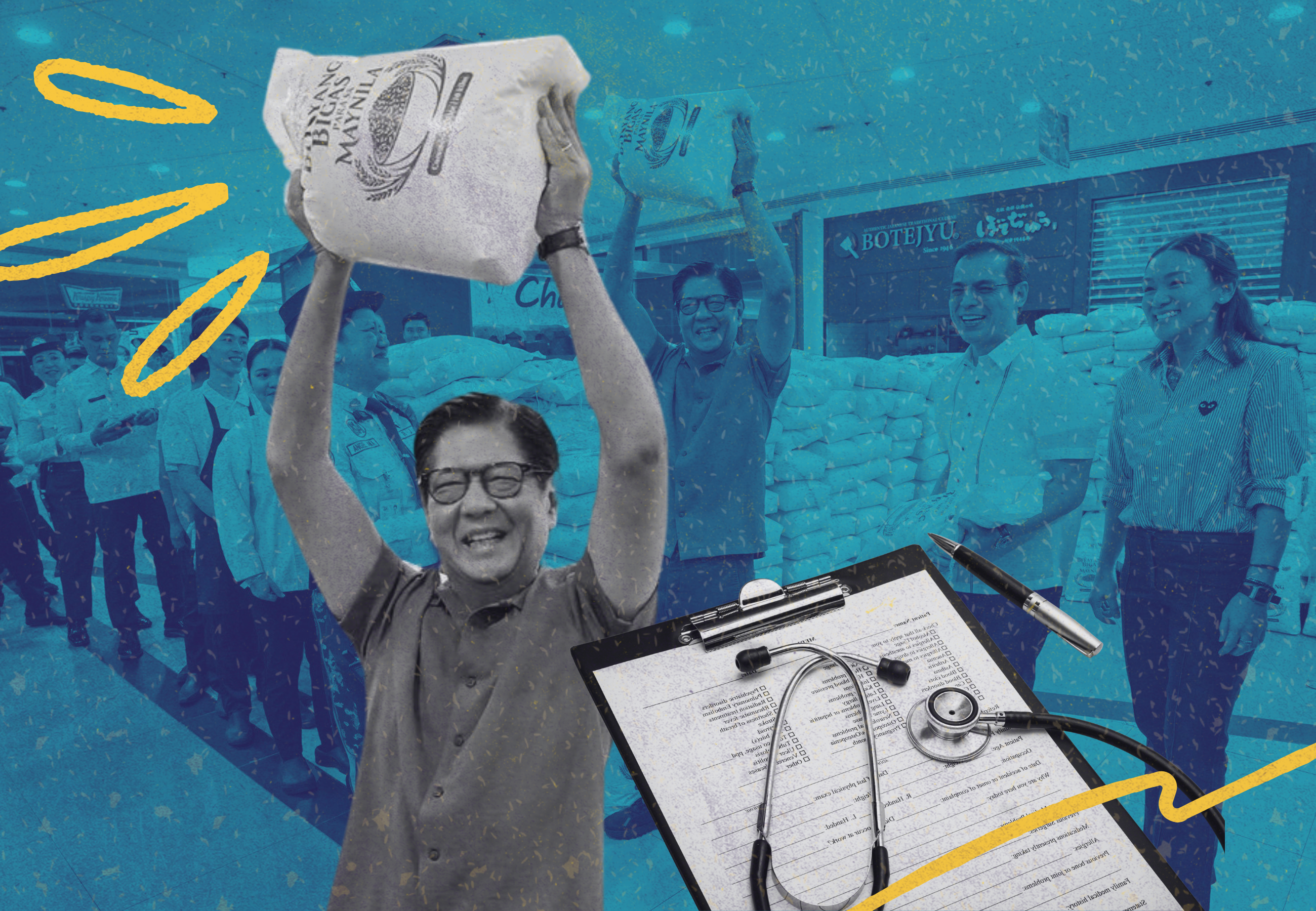
PRESIDENT FERDINAND Marcos Jr. was hospitalized for diverticulitis on January 21 this year. On January 22, Claire Castro, Palace Press Officer, said the president was discharged on the same day and returned to Malacañang. Media reports said that on the day he was in hospital, the president was represented by selected officials at events he was scheduled to attend.
In a vlog on February 1, Marcos said he was recovering from the diverticulitis and admitted that he had lost weight. He assured the public that his doctors found “nothing serious” about his condition. The media reported the information at the time, based only on what Marcos and the Palace had to say.
Marcos was seen in public only on February 5 when he attended an event hosted by the Technical Education and Skills Development Authority. But netizens continued to say that Marcos was unwell.
To date, Malacañang has not provided a medical bulletin issued by the president’s physician.
Marcos attended the news briefing with the Malacañang press corps on April 13, doing jumping jacks when he entered the room. On the same day, Malacañang showed videos of the president jogging to demonstrate the state of his health. Three days later, while distributing aid, he lifted a 10-kilogram sack of rice. News reports on these appearances referred to the exchange in social media which claimed Marcos was severely ill—some saying he was “dead.”
Scant background information
Rappler’s Bea Cupin, in an article published on April 16, provided important context, pointing out that before the president did his jumping jacks for the press, Marcos “had been relatively sparse in his appearances.” Cupin said there was no reason, however, to believe that Marcos had fallen ill again.
Picking up on Malacañang’s lack of reports on the president’s health, Sandra Aguinaldo on GMA-7’s 24 Oras April 14 episode cited the provision of the 1987 constitution that mandates that in case of serious illness, the Philippine president must inform the public about the state of his health. She pointed out that Marcos is not the first president to evade providing an official health bulletin on days when they failed to fulfill their schedule.
Aguinaldo showed file clips of Fidel V. Ramos, Joseph Estrada, Rodrigo Duterte and Marcos’ own father, Ferdinand Marcos Sr., engaged in physical activity to demonstrate their good health. She included a clip of Marcos Sr. showing his upper body to disprove claims about his having undergone surgery. Aguinaldo said she asked the Palace why there was no medical bulletin and that the Palace has yet to respond to their request. She recalled that when the press asked about the president’s health in January, Castro told the media that there was no need for one, pointing out that Marcos, the owner of the body (“katawan niya naman po iyon”), was not feeling anything serious.
24 Oras stands out for its comprehensive presentation, compared to other news programs which simply repeated Palace statements.
Online on April 17, TV5 anchor Lourd de Veyra gave more background, recalling the attempts of past presidents, including Marcos Sr., to present their apparent health to the media. De Veyra noted Corazon Aquino as an exception, describing how the press received regular updates about her health. De Veyra also cited Ana Marie Pamintuan, who had written in her column in The Philippine Star that Malacañang reporters were informed when the Aquino suffered from a common cold, and that she was absent from office only once when she suffered from vertigo.
Rumors online
CMFR had cheered Rappler for its article posted on January 29 that pointed out how the absence of a medical bulletin drives reporters and the public to ask more questions about the president’s health.
On April 9, Marcos attended the ceremonies for Araw ng Kagitingan. Netizens expressed their disbelief, saying that his appearance was staged or that mainstream media were fabricating the footage. Rappler’s Pauline Macaraeg argued that such misinformation was caused by the absence of a medical bulletin.
On April 22, Macaraeg showed the high level of interest in the health of the chief executive. Working with The Nerve, a data forensics company, she reported that during the same period of the president’s absence in early April, twenty percent of 65,000 Facebook posts mentioning Marcos was about the health of the president.
The two articles above and TV5’s Maricel Halili connected the issue of Marcos Jr.’s health to the case of Rodrigo Duterte, whose absence from public view caused the filing of a petition with the Supreme Court in April 2020 compelling the president to disclose the state of his health. The court dismissed the petition due to lack of substantial evidence that Duterte’s health was in question. The SC ruled that health disclosure is “totally up to the president’s sole discretion.”
The ruling, however, raises questions about media’s responsibility. The health of the president may be private and personal. The principle should guide media coverage: the health of the chief executive involves governance and remains a matter of public interest and concern.
Leave a Reply