PH Army calls out journalist for reporting “misleading assertions”; CMFR review confirms report was well-sourced
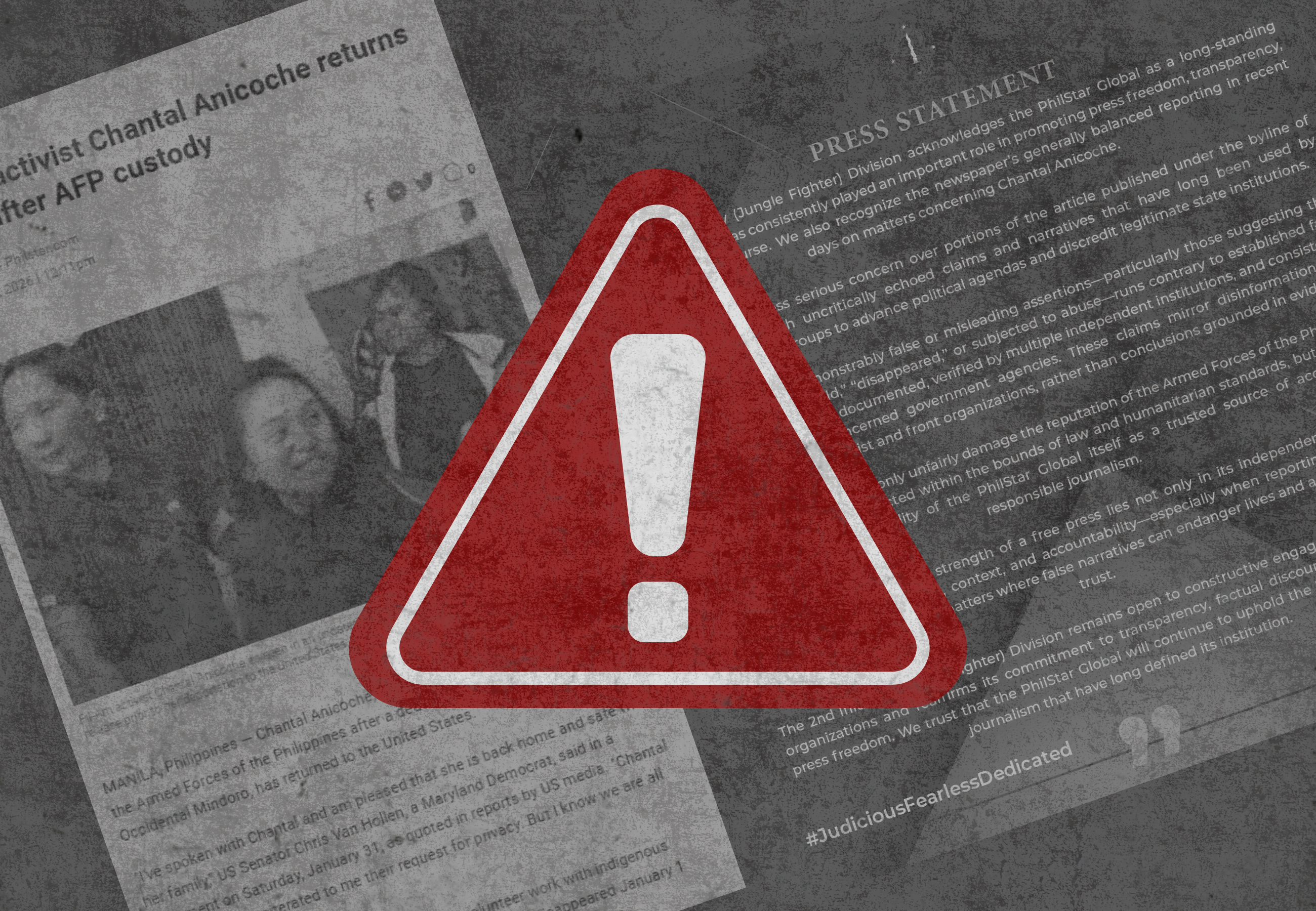
CMFR/PHILIPPINES – The Philippine Army’s 2nd Infantry “Jungle Fighter” Division (2ID) released a public statement on February 6, 2026, criticizing journalist Cristina Chi’s reporting on Filipino-American activist Chantal Anicoche. In the statement, the 2ID described portions of Chi’s report as “demonstrably false or misleading assertions” and accused the article of reflecting “disinformation lines propagated by extremist and front organizations.”
The statement reflected the framing of civil society sources as “extremist and front organizations,” a tactic that has long been considered a form of red-tagging.
However, CMFR’s careful review confirms that Chi’s report is well-sourced, responsibly attributed, reflecting several perspectives.
Chi’s article, published on February 2, 2026, reported Anicoche’s disappearance, her emergence, and eventual return to the United States, saying that. Anicoche was “held and disappeared” for several weeks. This was based on official statements made by human rights organizations and advocacy groups. Rights groups cited in the report warned that she could face “torture, interrogation, threats, and harassment in military custody,” while some described the military video showing her emergence from hiding as “staged.”
The article also reported the protests at Philippine consulates calling for her immediate release. Each of these claims was clearly attributed, demonstrating that the article did not assert contested claims but cited only statements and views of named sources about the case.
Chi included the statement of US Senator Chris Van Hollen, who expressed relief that Anicoche was “back home and safe with her family.”
The 2ID statement disturbs as it presents a military view that distrusts the credibility of civil society sources, asserting that the reporting “mirrors disinformation lines,” suggesting “alignment with hostile actors” – descriptions which are not supported by textual evidence to be found in the article itself. The criticism is unfair as it is unfounded.
The criticism is disturbing as it involves the military critiquing how journalists work, indeed, the practice of newswriting itself. Such a tendency can lead to statements and actions that could have a chilling effect on the free and independent practice of the press.
The National Union of Journalists of the Philippines (NUJP) expressed concern about the public statement as it could “intimidate reporters and the media community into sticking to official narratives.” NUJP commended the journalist for giving space to dissenting voices and sectoral organizations. “History teaches us that the media should be wary whenever men with guns deign to dictate what we should report and how,” the group added.
This case highlights the delicate balance between the government and the press. Given the power of state agencies, there is a tendency to favor the press, emphasizing the importance of both scrutiny and press freedom. While any individual or institution can challenge media reports, public denunciations by government officials that equate advocacy voices with extremist groups pose a threat to independent journalism and democratic accountability. Chi’s article serves as an example of responsible journalism, illustrating that careful sourcing, proper attribution, and contextualization are crucial when reporting on human rights and security issues.
Leave a Reply