CMFR year-end review: Widespread corruption, Duterte controversies dominate 2025 coverage
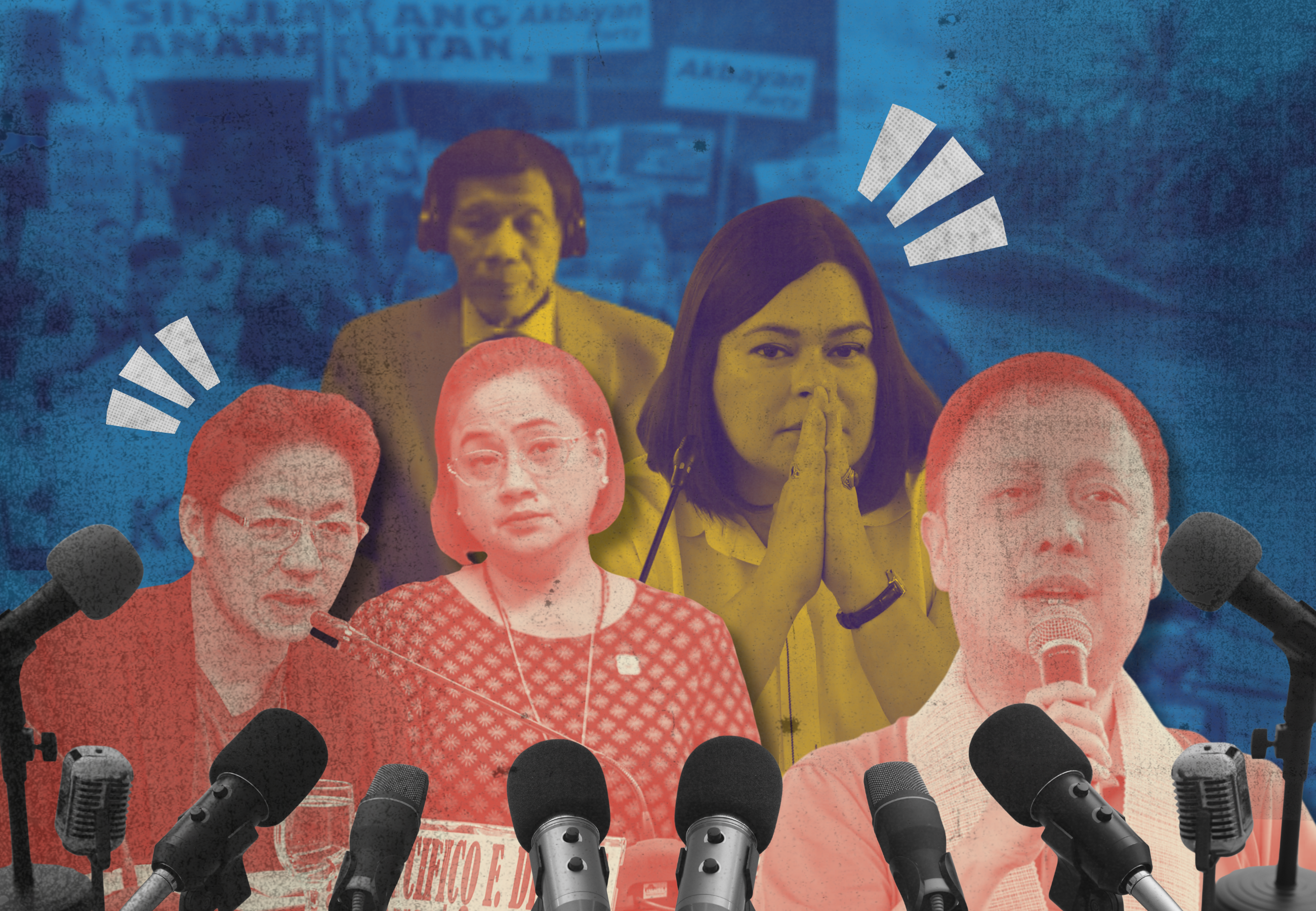
THIS REVIEW examines the top issues that shaped news coverage in 2025. The critique notes how the media captured the key narratives and key actors who set the stories in motion. It notes the failure of journalists to interpret the meaning of the news as events which unfold from past circumstances. The cycles of events render the news as learning experiences to help society deal with crisis; perhaps, avoid harm and destruction.
CMFR presents the power of investigative reporting and other in-depth reports that examine background, searching the news events for the lessons they hold not just for journalists but for those engaged in the collective effort to improve the state of things, pointing to the missed opportunities, the slips and gaps in institutional as well individual responses to the challenges confronting Filipinos in 2026.
Corruption in Flood Control Projects
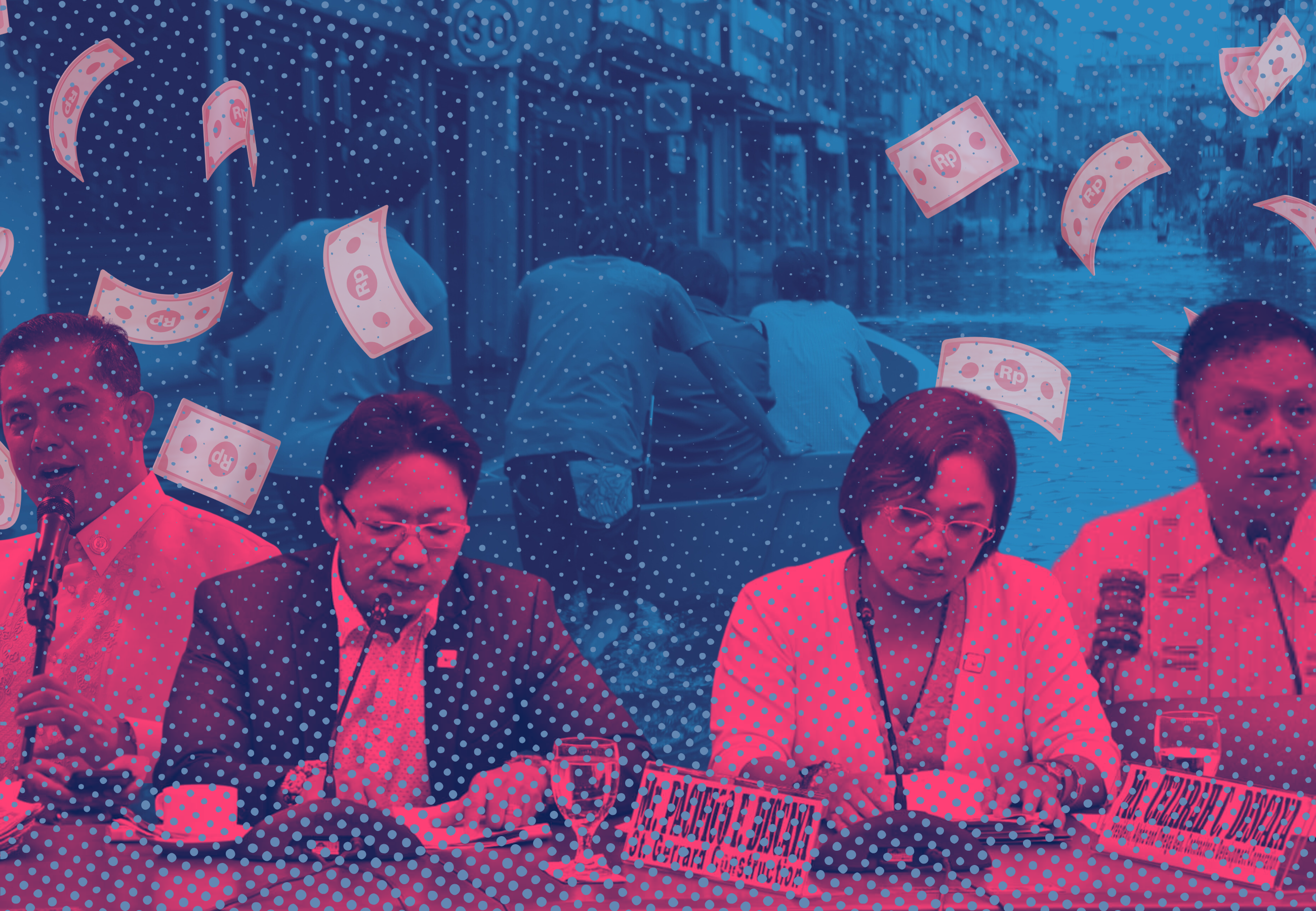
Corruption in flood control emerged as the most sustained issue covered by the media over the past year. In earlier years, flooding was largely framed as a seasonal disaster, with coverage focusing on rescue efforts, damage estimates, and weather conditions. Even when President Ferdinand Marcos Jr. questioned flood control spending in 2024, asking why flooding persisted despite large budget allocations, media reports largely stopped at quoting his remarks, offering little follow-through on accountability. CMFR reviews noted that this event-driven framing failed to examine structural causes such as failed infrastructure, contractor performance, and weak government oversight.
The narrative shifted decisively after President Marcos publicly named top contractors linked to failed flood control projects in his 2025 State of the Nation Address. His expose prompted sustained media scrutiny of specific individuals and companies, marking a departure from episodic disaster reporting. Scrutiny led to an inter-agency investigation that exposed systemic issues involving the Department of Public Works and Highways (DPWH) and contractors such as Sarah Discaya and political figures like former Ako Bicol Party-list Representative Zaldy Co. The investigations highlighted entrenched patronage networks and the involvement of several politicians within the country’s flood control and infrastructure programs.
Investigative outlets such as the Philippine Center for Investigative Journalism (PCIJ) played a key role in deepening the coverage, exposing contractor networks, the use of “allocable funds” within the DPWH, and patterns of political patronage that enabled corruption.
Media, including Rappler, Philstar.com, and Inquirer.net, helped sustain public attention. Jessica Soho’s ongoing investigative series, now several episodes in, expanded the inquiry beyond flood control to other government construction projects.
Several reports also revealed that many projects were “ghost” or substandard works, despite being officially listed as completed.
However, coverage also revealed that accountability efforts remain fragile. DPWH Undersecretary Catalina Cabral, a key figure in the anomalous construction projects under the DPWH, was found dead on December 19, 2025, after she indicated her willingness to publicly disclose full details of what she knew in a Senate inquiry. Her death may have raised more questions. So far, news has sustained its focus on the significance of the Cabral files and the truths these may reveal.
While the quality of reporting varied across outlets, investigative journalism succeeded in reframing flooding as a systemic governance failure rather than a matter to be accepted as part of nature. Articles went beyond the immediate circumstances of the crisis, demonstrating the importance of exploring related issues to reveal the extent of the problem.
Controversies hounding the Dutertes
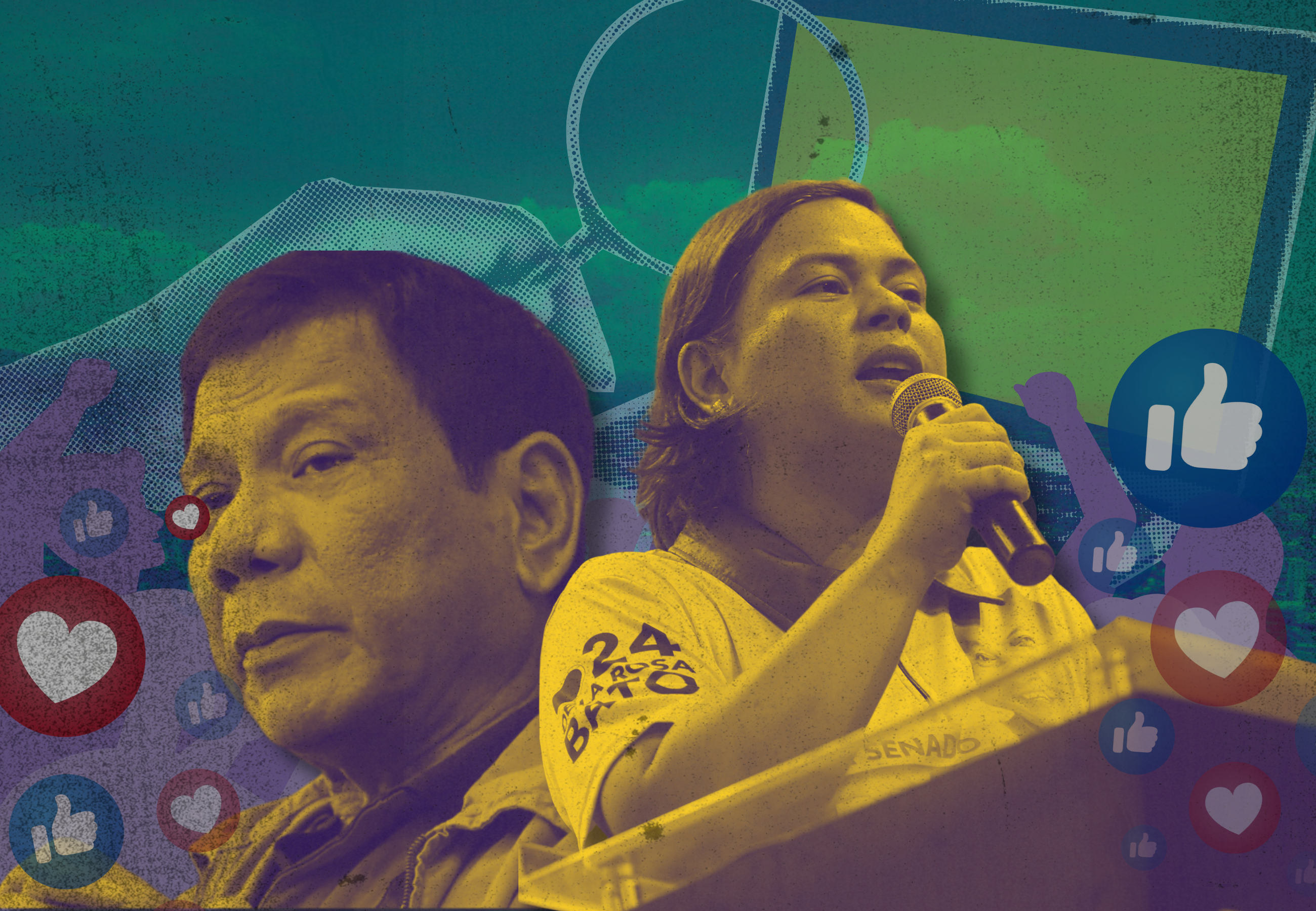
The Duterte family maintained its hold of the public sphere, deepening the polarization of political groups. Controversies kept the former president, Rodrigo Duterte in the news along with daughter, Vice President Sara Duterte. Coverage included the political ties and alliances that could still influence and shape Philippine politics and national affairs.
On February 5, 2025, Sara Duterte was impeached by the House of Representatives on the grounds of “betrayal of public trust, culpable violation of the Constitution, bribery, graft and corruption and other high crimes.” The House transmitted the articles of impeachment to the Senate before both chambers adjourned sessions in time for the elections. But the process was stalled at every turn, primarily by the Senate leadership that insisted the impeachment trial be done after the May elections.
Coverage focused on the movements within both legislative chambers, picking up senators’ statements on when to hold impeachment hearings.
Fortunately, journalists also turned to legal luminaries for their views on the Constitutional provisions on impeachment. Sources also included groups that criticized the delay as politically motivated, disregarding the urgency of the need to establish accountability among politicians and their followers.
The Supreme Court declared as null and void the impeachment complaint that the House transmitted to the Senate. Sara Duterte and her allies had challenged its constitutionality, pointing to the charter provision that says “No impeachment proceedings shall be initiated against the same official more than once within a period of one year.” Three complaints were filed earlier in the House in December 2024, but none of these were referred to the House Committee on Justice. The Senate ultimately archived the impeachment complaint.
Meanwhile, the International Criminal Court (ICC) arrested former president Rodrigo Duterte on March 11 for “crimes against humanity perpetrated during the war on drugs” including those carried out by the Davao Death Squad when Duterte was still mayor of Davao City. The media were quick to cover the turn of events as these happened — from Duterte’s arrival from Hong Kong to his immediate arrest upon landing at the Ninoy Aquino International Airport.
The question on the legality of his arrest took over the news for the first few days, as those allied with the Dutertes led the narrative that he was unlawfully taken to The Hague. The news gave time and space to the differing opinions of legal experts, some questioning the legality of the arrest and others saying that the arrest followed established protocols.
Senator Imee Marcos, a known ally of the Duterte family, was active with attempts to raise the legality of the arrest through three Senate hearings. CMFR noted the observation of Jean Mangaluz, Philstar.com reporter, that “What was initially intended as an inquiry into the implications of the ICC’s actions on foreign relations shifted into a search for who was responsible for Duterte’s predicament.” She added that, “Imee’s preliminary findings from the hearing had little to do with foreign affairs, but focused instead on the Marcos administration’s role in Duterte’s legal troubles.”
CMFR cheered the efforts of a few media outfits that exposed the coordinated online networks that tried to discredit the ICC and frame Duterte as a victim. CMFR also noted that Rappler and Bulatlat were the most consistent in providing background information on Duterte’s case and including accounts of the surviving families of those who died in the war on drugs, establishing the historical background that led to current developments.
The hearing to confirm the charges against Duterte has been scheduled for February 23, 2026. It was originally scheduled from September 23 to 26, 2025 but was postponed so the court could evaluate the defense’s claim of Duterte’s unfitness for trial due to cognitive impairment. An independent medical panel appointed by the ICC released on December 5 a report that concluded, “while frail and elderly, Mr. Duterte nevertheless possesses the necessary capacities to meaningfully exercise his procedural and fair trial rights.”
Rappler’s Lian Buan said the panel did not use the term “fit for trial” in its conclusion “because that is a legal determination that only the ICC pre-trial chamber would make.” The medical panel’s report is not available to the public, but some of its contents were included in the prosecution’s filing, which urged the pre-trial chamber to reschedule Duterte’s confirmation of charges hearing. In a ruling dated January 26, 2026, the pre-trial chamber declared Duterte fit for trial.
Missing sabungeros

The case of 34 missing sabungeros became one of the most gripping stories to be reported, along with the criminal investigation launched by the police. Reports referred to countless disappearances from 2021 to 2022, a record that deserves to be reviewed as an indication of unchecked criminality. The record suggests little hope that the fate of the missing persons will remain an unsolved mystery.
After years of episodic reporting providing little information about the missing individuals, the narrative shifted dramatically on June 17, 2025, when whistleblower Julie “Dondon” Patidongan stepped forward to share his information. News picked up his revelations about systematic abductions, killings, and the disposal of bodies in Taal Lake, Batangas. First telling the story to GMA’s 24 Oras, Patidongan pointed to the involvement of businessman Charlie “Atong” Ang, among others. Ang had previously been linked in other controversies: in 2000, he was tied to the impeachment trial of former President Joseph “Erap” Estrada and faced plunder charges in connection with gambling-related operations, and in 2010, he was publicly named by Senator Miriam Defensor-Santiago among the country’s top jueteng operators.
Media outlets closely tracked both the allegations and the government’s actions: inter-agency dives into Taal Lake on July 10, the restrictive custody of at least 15 police officers implicated in the case, and the Department of Justice press briefings clarifying legal strategies, like the possibility of filing murder charges even without recovered bodies. By the end of the year in December 2025, the DOJ had found prima facie evidence against Atong Ang and 21 co-accused for multiple counts of kidnapping with homicide and serious illegal detention, prompting formal filings in regional courts. Throughout the year, coverage balanced emotional narratives of families still seeking closure with detailed reporting on legal developments and evidentiary challenges.
The media’s role in 2025 was pivotal, but on the whole, coverage was scattered with extended periods when media did not exploit the value of discussing the unprecedented complexity of the case and its legal requirements.
Coverage spotlighted procedural hurdles, including motions for reconsideration filed by Ang in December, and advocacy from victims’ families urging charges against additional respondents as 2026 approached.
Most recently, on January 13, a Laguna Regional Trial Court ordered the arrest of Atong Ang and 17 others. Ang is facing three counts of kidnapping and serious illegal detention, and kidnapping with homicide. He is now believed to be in hiding abroad. The news has had little to add to the many stories involving Ang.
Mid-term elections

The 2025 midterm elections on May 12 showed both the persistence of familiar political patterns and the uneven performance of the media in helping voters understand the vote. Much of the coverage focused on candidates’ personalities, campaign events, and poll rankings, with limited attention to platforms, governance records, or broader electoral issues.
CMFR monitoring noted that administration-backed senatorial candidates received more TV news coverage early in the campaign, making the competition seem predetermined. Print and online outlets largely stuck to the familiar campaign trail, repeating daily events instead of helping voters compare candidates’ positions on current issues. This was reinforced by soft-focus profiles, such as Inquirer and Manila Bulletin pieces on the Villar family, which promoted them without scrutiny.
There were, however, important exceptions and some media outlets stood out: TV5’s election-day reporting used live vote data and provided clear context, while ABS-CBN News reported how party-list outcomes left genuine sectoral groups underrepresented. ABS-CBN’s “KampanyaSerye 2025” and a few more reports also highlighted what voters needed but rarely received: comparisons of platforms, attention to marginalized sectors, and explanations of electoral rules. Investigative reporting also played a key role: PCIJ mapped the influence of political dynasties and examined campaign spending and digital ads, while Philstar.com, Rappler, and VERA Files exposed coordinated propaganda aimed at undermining Bam Aquino’s Senate victory.
Disasters
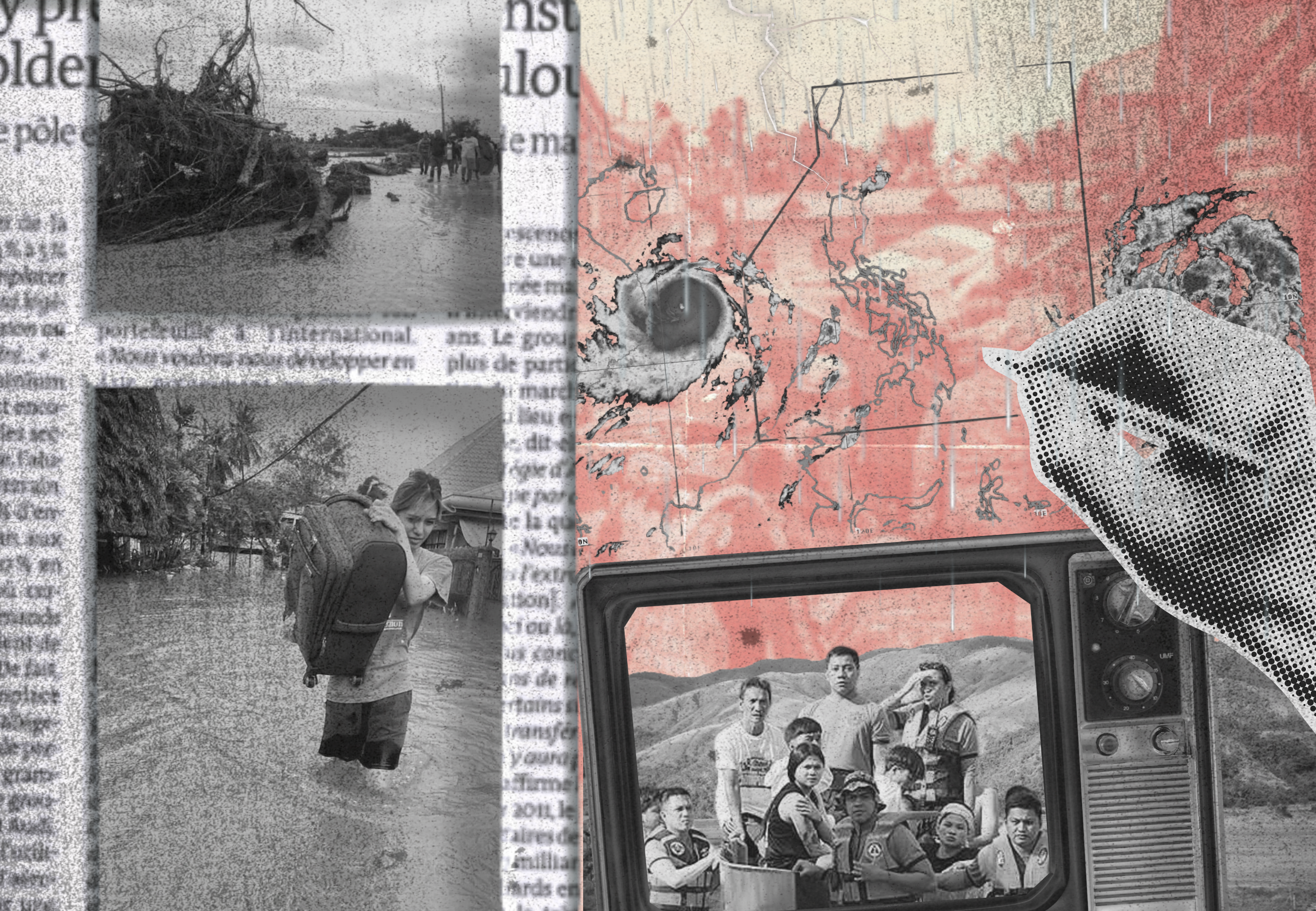
Media coverage of natural disasters expanded across TV, print, and online platforms as floods and earthquakes caused widespread destruction. Coverage of the September 2025 6.9 magnitude earthquake in Cebu included early scientific framing while reports did the usual, highlighting the severity of damage, including the 209,972 affected families. Online outlets Rappler and Inquirer.net distinguished themselves by quickly contextualizing the quake through scientific explanations and expert input. The two news organizations highlighted the reason for Cebu’s unpreparedness: The area of the province had never been earthquake prone. ABS-CBN News Online released a short documentary, both in Bisaya and Tagalog versions, that included the stories of the affected communities, while also including an expert explanation of the quake’s effects. Primetime TV news of ABS-CBN, GMA-7, and TV5 expanded their scope and strengths in field reporting. The three major news outlets demonstrated their capacity to track the disaster for nine days, and continuously reported casualties from rescue authorities as sources on the ground.
On the trail of news tragedies caused by the quake, severe tropical storm Tino, pummeled parts of Visayas and Mindanao, followed by the tropical storm Uwan which hit Luzon in November. The two typhoons were described among the deadliest typhoons to hit the Philippines historically. Newsrooms sustained coverage on TV and online reports. Major networks ABS-CBN, GMA-7, and TV5 provided real-time updates and special coverage with field-based storytelling aired on different programs.
A notable Visayan-language documentary by ABS-CBN’s Digicast Negros featured the most affected communities and their firsthand experiences in the Negros province.
Online reports on typhoon Tino also included scientific explanations, citing PAGASA data, environmental groups, and academic studies to explain unusual rainfall. Coverage of typhoon Uwan also reviewed the limits of natural barriers in Luzon, like the Sierra Madre, along with other environmental factors that worsened the circumstances and impact of disasters. Rappler’s in-depth reporting stood out, providing supplemental explainers, such as how tropical cyclones are formed, which helped readers to understand storms as part of the larger dynamic of environmental factors.
While disaster reporting was timely and informative, coverage did not use the opportunity to familarize the public with the nature and impact of climate change and the challenge it presents to a country that sits on the typhoon belt.
Media could have done with more discussion on climate change. Instead, it was often mentioned only in passing, without analysis of its different effects and the sum of its impact on the country, along with the lack of scrutiny of government responses, including the long-term planning to prevent or mitigate the disastrous impact of typhoons.
Death of Pope Francis
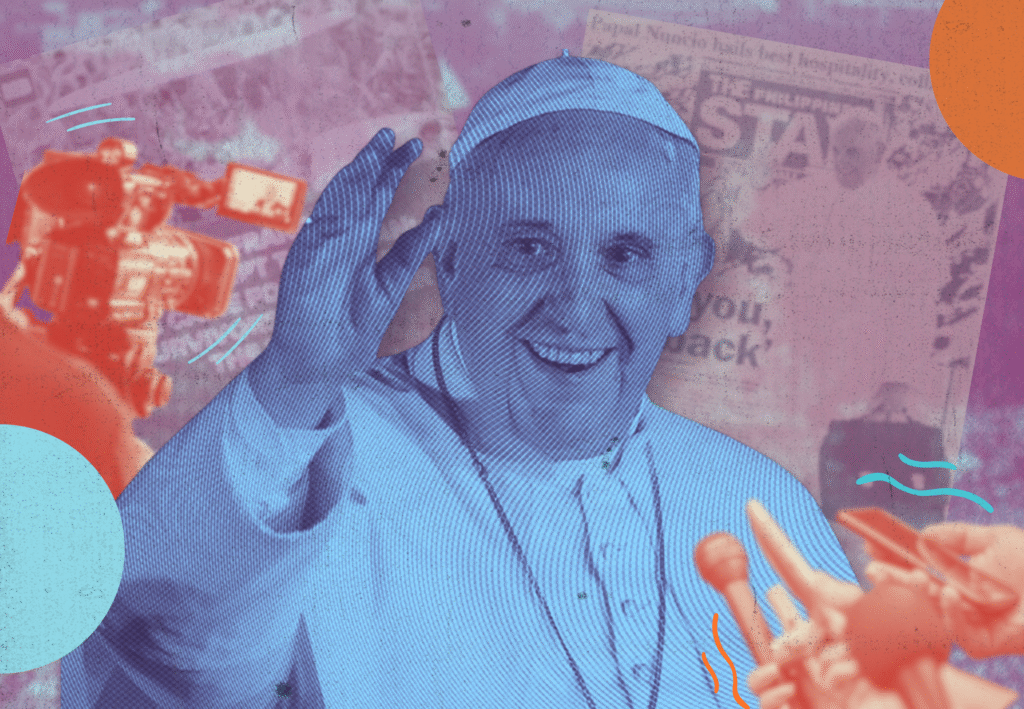
Philippine media was one in paying beautiful tribute to Pope Francis, who succumbed to double pneumonia on April 21 at age 88. Pope Francis visited the country in 2015, when five days of special coverage shared intimate moments which further endeared the Pontiff to Filipinos. The special coverage recalled the life and work of the pope, reminding the audience of how Francis succeeded in connecting the papacy to Catholics and non-Catholics alike with his humility and inclusive approach to leadership and the fulfillment of his duties.
TV, print, and online media reported the Pope’s illness and followed each announcement as breaking news until the inevitable moment of his death. News accounts then included special reports recounting his youth and decision to become a priest, highlights of his pastoral life before becoming pope, emphasizing his commitments to social justice, peace, interfaith dialogue, and environmental stewardship.
Coverage pulled from the archives of his 2015 visit to the Philippines, a defining moment in the nation’s collective memory of Pope Francis as a pontiff for the people. Newsrooms recalled that aside from visiting Manila, Pope Francis braved the bad weather to fly to Tacloban City, Leyte, offering comfort to those who survived Typhoon Yolanda a few years earlier.
Filipino correspondents reporting from Vatican City captured the global outpouring of grief, providing as well details of Pope Francis’ funeral rites and the fulfillment of his wishes for simple rites and instructions about his burial. Back in the Philippines, media documented nationwide masses and reflections from the clergy, lay people, and those personally touched by his visit. Beyond remembrance of Pope Francis, newsrooms picked up the implications of his passing, explaining the need to choose a new leader of the Catholic Church in touch with the times to ensure his continuing legacy. Media covered the arrival of cardinals from all over the world for the papal conclave. By May 9, Robert Francis Prevost, a dual citizen of the United States of America and Peru, was presented to the world as Pope Francis’ successor, taking the name Leo XIV.
Moving forward
The patterns in news reporting highlight the continuing challenge for journalism to sustain scrutiny of developments beyond headlines and to contribute meaningfully to democratic discourse.
The year’s coverage highlighted both the strengths and persistent limitations of Philippine journalism, as many of the issues that dominated the news were not new but were spillovers of unresolved problems and issues from previous years. Corruption in public works, questions of justice for victims of violence, contested exercises of political power, and the country’s vulnerability to disasters continued to resurface, underscoring the depth of institutional failures that outlast news cycles.
At its best, sustained investigative reporting helped situate these developments within broader structures of governance, exposing how political patronage, weak oversight, and legal delays enable the recurrence of abuse and impunity. Consistent, in-depth coverage is essential to demonstrate journalism’s capacity not only to inform but also to challenge narratives that normalize inaction and evade accountability. Moving forward, the press must track not only the stories presented by those in authority but also include the other side of news represented by the public, the people whose names and faces may never merit news attention but who are the reason why officials are given power. The value of news, after all, lies in the capacity of journalism to connect people’s needs to those in power, who derive their authority from the people who they have sworn to serve.
Journalists’ connection to power has meaning only if it is bound to the greater good of making lives better. Without this underlying value, journalism is reduced to a superficial exercise of human vanity.
Leave a Reply